










Breaking News
 Flashback 2012: Ron Paul's Final Floor Speech to Congress (Publisher Recommended)
 On 1776 and Tokenization
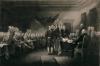 America is not a country that had a revolution, but a revolution that has a country.
 Why China's Open Source AI Will Crush the U.S. Industry and Collapse the Semiconductor Bubble
Top Tech News
 Our Diesel-Electric Truck Is So Quiet the Military Wants One
 World's first hotel entirely staffed by robots to open in 2027
 Researchers in China are ignoring bug spray, citronella, and netting.
 Our bodies may be able to regrow lost limbs after all
 Chinese cars go blacker than black via hybrid nano tech
 World first: Human embryo model grows its own organs – in the lab
 Dead lithium batteries revived to 95% capacity via electrochemical bath
 Compact laser engraver levels up your DIY crafts setup
 'Groundbreaking' Potential Lupus Cure Sends Patients into Remission, Allowing Dreams...
 SpaceX Orbital Travel and Orbital Hotels Need Starfall – Getting Back Safe and Cheap is Exciting



America is not a country that had a revolution, but a revolution that has a country.
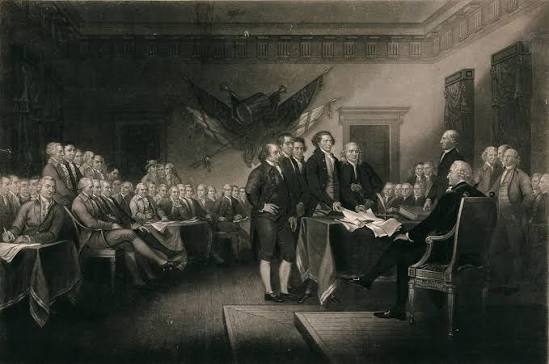
A quarter of a millennium ago, the New World declared its independence from the old one. This was not a matter of geography, but of society and history. This New World—the world of modern freedom—had been developing in the West for several centuries, but its historical trajectory was global from the beginning. By the later eighteenth century, the New World was everywhere demanding that the Old Regime of the West make way for it. All the ruling establishments—be it the parliamentary oligarchy in Britain, the tight-knit patriciate that governed Geneva, or the absolute monarchies of France and Austria—faced radical, reforming, and revolutionary movements. For all the differences between these movements, they shared common aims: that modern, bourgeois freedom should be given full scope to develop on its own terms, and that the state should be the servant of society, not its master. From the "Wilkes and Liberty" and parliamentary reform movements in Britain to the Volunteer Movement in Ireland, from the Genevan Revolution to the Patriot Revolt in the Netherlands, from the Brabant Revolution to the French Revolution, the bourgeois revolution reared its head. This revolution was waged for the New World of bourgeois society, not for the bourgeoisie. While it was defeated and thwarted almost everywhere, it made a spectacular breakthrough in a backwater of Western civilization, among the eastern seaboard colonies of British North America. And though the victory that the bourgeois revolution achieved there was fragile and tentative, it endured—and endures.
America is not a country that had a revolution, but a revolution that has a country. The revolutionary spirit of the modern, bourgeois world was crystallized in a document drafted by Thomas Jefferson, revised by the Committee of Five and the Second Continental Congress, and finally adopted by the Congress on the Fourth of July, 1776. Before paying "a decent respect to the opinions of mankind" by detailing the causes that compelled American independence, before proclaiming the right to political revolution that legitimized this independence, the Declaration announced a social revolution: "We hold these truths to be self-evident, that all men are created equal, that they are endowed by their Creator with certain unalienable Rights, that among these are Life, Liberty and the pursuit of Happiness. That to secure these rights, Governments are instituted among Men, deriving their just powers from the consent of the governed." The very familiarity of these words obscures the social revolution they proclaimed.
The historical New World—the "commercial society" of Enlightenment thinkers and the "bourgeois society" (bürgerliche Gesellschaft) of Hegel and Marx—was one in which the freedom of all made possible the greater freedom of each, and the freedom of each contributed to the greater freedom of all. The Declaration's unalienable rights are the rights of the society of free labor, of universal social cooperation based on the free exchange of labor and its products. In this society, human beings have no masters and set the course of their own existence (life and liberty); they are not prescribed the ends for which they live, but rather determine them in the midst of living (the pursuit of happiness). By proclaiming these self-evident truths, the Declaration made clear that a new society had come into existence and that it would brook no power outside of itself. In declaring the independence of the United States of America from Great Britain and its empire, the Revolutionaries declared the independence of this New World from the world as it was and had always been.