










Breaking News
 Lindsey Graham's death leaves Senate agenda in limbo
 Next-Gen Ramjet Fuel Propulsion System For Future Offensive, Defensive Missions Tested
 Why the West keeps missing the point on Russia
 US, Ukraine strike PAC-3 missile production deal -- with a catch
Top Tech News
 Modular Reactors To Solve Data Center Hysteria?
 DeepSeek Developing In-House AI Chip In Bid To Cut Nvidia Reliance
 America just took three brand-new nuclear reactors critical in thirty days, a first for any...
 Your brain doesn't peak in your 20s after all: Study reveals your mind is at its sharpest betwee
 Compasses, not maps: China is building a different type of AI
 The Return of the Ekranoplan
 Farewell, atom-smashing Large Hadron Collider
 This is already starting.
 The Crosley IcyBall
 It's Not a Conspiracy Anymore: Med Beds Exist and Trump Knows It



US, Ukraine strike PAC-3 missile production deal -- with a catch
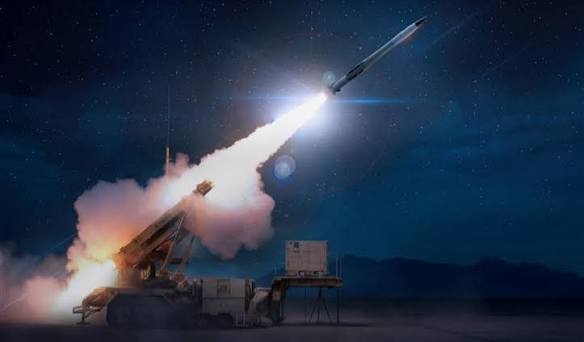
During their bilateral meeting on the sidelines of the NATO summit in Ankara, US President Donald Trump and Ukrainian President Volodymyr Zelensky reached a major agreement regarding Patriot Advanced Capability-3 (PAC-3) missile interceptors.
The PAC-3 is the premier hit-to-kill air defense missile used by the US and many of its allies. The weapon has played a major role in the Iran conflict.
The proposed arrangement for Ukraine has two parts: a political agreement to give Ukraine a license to manufacture PAC-3 interceptors; and a short-term supply of PAC-3 interceptors from US inventory, "to bridge the gap." Ukraine is confident it can manufacture PAC-3 missiles under license.
Today, the only production of PAC-3 missiles outside the US is in Japan, where Mitsubishi Heavy Industries produces them under license.
The designation "PAC-3 Interceptor" is important. The US is focusing on expanding production of the PAC-3 MSE interceptor missiles, which offer significantly greater range and other improvements over the PAC-3. While it needs clarification, it appears President Trump offered PAC-3 but not PAC-3 MSE to Ukraine.
The US and Ukraine will soon start "technical talks" where many of the major issues, still undecided, can be addressed.
The MSE variant represents a comprehensive redesign optimized to defeat more complex, faster tactical ballistic missiles and hypersonic threats. There are many changes to the MSE. One of them is to go from a single pulse to a dual pulse rocket motor.
The MSE's motor can ignite its first pulse to clear the launcher and accelerate toward the target area, then coast before igniting a second pulse later in flight. This provides a critical burst of kinetic energy right during the terminal phase, allowing the missile to pull high-G maneuvers against actively evading or high-velocity incoming threats.
It is not clear if the MSE version can defeat Russia's hypersonic missiles such as the Kinzhal, Zircon or Oreshnik. The PAC-3 version would face problems against the Kinzhal and Zircon and probably not be able to stop the Oreshnik.