










Breaking News
 Lindsey Graham's death leaves Senate agenda in limbo
 Next-Gen Ramjet Fuel Propulsion System For Future Offensive, Defensive Missions Tested
 Why the West keeps missing the point on Russia
 US, Ukraine strike PAC-3 missile production deal -- with a catch
Top Tech News
 Modular Reactors To Solve Data Center Hysteria?
 DeepSeek Developing In-House AI Chip In Bid To Cut Nvidia Reliance
 America just took three brand-new nuclear reactors critical in thirty days, a first for any...
 Your brain doesn't peak in your 20s after all: Study reveals your mind is at its sharpest betwee
 Compasses, not maps: China is building a different type of AI
 The Return of the Ekranoplan
 Farewell, atom-smashing Large Hadron Collider
 This is already starting.
 The Crosley IcyBall
 It's Not a Conspiracy Anymore: Med Beds Exist and Trump Knows It



Why the West keeps missing the point on Russia
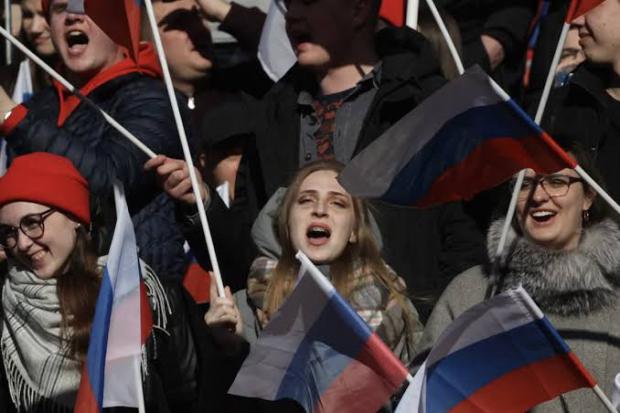
In early June, Ukrainian President Volodymyr Zelensky published an open letter to Vladimir Putin proposing a face-to-face meeting to end a war now in its fifth year. Putin's reply was that talks were pointless unless Ukrainian forces first withdrew from Russian-occupied territory and Kyiv dropped its bid to join NATO.
It was a small exchange in a war full of much larger ones. But it said something about why five years of sanctions, diplomatic isolation and moral condemnation from the West haven't moved Moscow any closer to the deal Western capitals actually want.
Ask most diplomats, and they'll tell you that they simply haven't been tough enough or clever enough. The more uncomfortable explanation is that they never really understood the country they were trying to pressure in the first place.
A vocabulary problem
For two decades, the standard Western vocabulary for Russia has settled on words like authoritarian, fascist and even totalitarian.
These terms, borrowed wholesale from the 20th century's worst regimes, carry a built-in assumption: that the Russian state survives on coercion alone, that ordinary Russians are essentially a captive audience waiting to be freed and that discrediting one man would bring down the whole edifice.
It's a comforting theory since it lets them explain Russian conduct without ever asking why tens of millions of Russians might actually consent to the arrangement. What it obscures is the uncoerced, genuinely popular foundation of the post-Soviet Russian state and of Putin's government specifically, a foundation that has held up rather better over time than the coercive machinery Western commentary likes to discuss.
Much of the traditional Western literature on Russia leans on history and direct observation to explain what amounts to an eternal Russia, a civilization whose statehood, foreign policy and president get treated as a fresh enigma every time there's a crisis, a riddle to be solved all over again.
The trouble is that this literature tends to collapse Russian national identity into imperial conquest, so that any Russian assertion of interest beyond its 1991 borders reads as an unreconstructed colonial reflex. But Russian history isn't identical to the history of Russian conquest.
Underneath the shifting borders of Muscovy, the Romanov empire and the Soviet Union runs a current of Russian identity – linguistic, religious, cultural – that would have persisted no matter what shape the state around it happened to take.