










Breaking News
 Bill Maher's Left Wing audience audibly gasps when he reads what the Democratic Socialists...
 Park rangers are using Marxist-style tactics to suppress young American men…
 Trump Revives Greenland Threat, Discusses Venezuela as the 51st US State
 How Washington Won the War
Top Tech News
 Idaho's High Desert Becomes Hot Spot For Nuclear Power Revolution
 The World's Largest Electric Aircraft Is About to Take Its First Flight
 Tesla Cybercabs and Superchargers Will Act as Mini Cell Towers for SpaceX Starlink
 Elon Vows AI-Made 'Odyssey' After Blasting Nolan's Take On Homer
 Anthropic is launching its own drug discovery programs for rare diseases using Claude...
 SpaceX AI Satellites Will Have 250 Kilowatts of Power
 Chinese researchers have developed a sodium-metal battery that can fully charge in just 4 minutes...
 SpaceX Starship Flight 13 in 3 Days - Thursday July 13
 Chinese Scientists Develop Nuclear Battery Using Carbon-14
 Teleoperated humanoid robots complete first-ever live surgery



How Washington Won the War
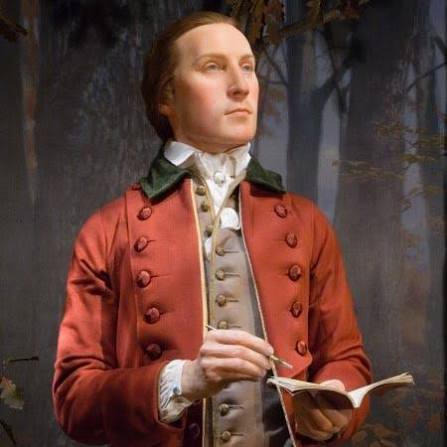
This essay by FEE's President Emeritus is drawn largely from his forthcoming book, Born of Ideas: How Principles, Faith, and Courage Forged America, available for pre-order now on Amazon.
If you want to do well in a job interview, or impress high society at a fancy cocktail party, remember this useful tidbit of 18th-century advice: "Rinse not your mouth in the presence of others."
A teenage George Washington copied that from a popular collection of maxims known in his day as "The 110 Rules of Civility." It was number 101. With the earliest versions dating back to French Jesuits in the 1590s, that manual of good behavior shaped Washington's character at a formative age. He was renowned in later life as a man of integrity who practiced the decorum, respectful discretion, and proper conduct outlined in that influential pamphlet. He certainly never gargled in front of anyone, so far as we know.
"Associate yourself with men of good quality if you esteem your own reputation; for 'tis better to be alone than in bad company." That was rule number 56. Washington seems to have lived up to that one, too.
My personal favorite of all the rules is number 110, the very last one, because it conveys what made Washington exceptional: "Labor to keep alive in your breast that little spark of celestial fire called conscience."
As commander-in-chief of the Continental Army throughout America's eight-year War for Independence, Washington led the country to a victory that seemed beyond reach in the early stages. His lost battles outnumbered his wins by more than two to one. How did he manage to keep thousands of regular soldiers and militia on the same page for so long when few of them received more than a pittance in compensation while their families struggled in their absence?
To be sure, Washington was daring and audacious. Crossing the Delaware on a wintry Christmas night in 1776 to assault Hessian mercenaries was a master stroke. So was his plan five years later to lay siege to Yorktown and rely on French allies to bottle up the Royal Navy. Washington's use of spies is legendary; he even forged documents in his own handwriting and deployed double agents to deliver them and befuddle the best British generals. Avoiding a risky "grand battle," he skillfully implemented a strategy and the appropriate tactics to wear down the enemy. But on paper, it almost always looked like a British victory was the safest bet.
Washington's greatest strength was intangible in one sense but very real in another. It was linked to the last word in rule 110—conscience. The Merriam-Webster Dictionary defines it as "a faculty, power, or principle that steers toward what is right and away from what is wrong." A person of strong character is a person of conscience who tries to do what he believes is morally good. Conscience is an inner voice, a moral compass. It helps form our character and guides our decision-making. A leader who holds his character accountable to his conscience possesses the ability to inspire and motivate. Self-discipline comes naturally to him. He sets a standard others can admire and emulate.