










Breaking News
 Inside the Emerging Microcollege Movement
 BYD Claims Its New EV Can Go 683 Miles On A Charge--And Add Hundreds More In 5 Minutes
 China exit rules tightened to guard rare earth, battery secrets
 The Constitution's Forgotten Economic Tradeoffs
Top Tech News
 Voyager 1 approaches one light day from Earth
 Visual Implants
 Renewable Energy Breakthrough! World's Most Efficient Tesla Turbine System
 I Told You So
 Meet Sunbird, a nuclear fusion-powered space tug concept from Pulsar Fusion.
 China and Russia launch 29-nation AI alliance to rival western control of technology
 BREAKING: China has begun manufacturing domestically developed Immersion Deep...
 Idaho's High Desert Becomes Hot Spot For Nuclear Power Revolution
 The World's Largest Electric Aircraft Is About to Take Its First Flight
 Tesla Cybercabs and Superchargers Will Act as Mini Cell Towers for SpaceX Starlink



The Constitution's Forgotten Economic Tradeoffs
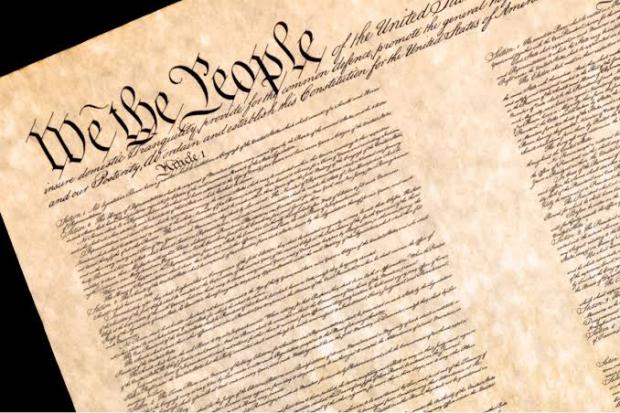
Even though the Fourth of July is officially in the rearview mirror now, the country is still basking in the glow of Two-Hundred-And-Fifty. The United States declared independence 250 years ago. Britain recognized that independence eight years later, 242 years ago. Our current governing document, the US Constitution, was ratified 238 years ago. All three could be called our "founding," but July 4 has stood in for all three. Good enough, as it were, for government work.
The Declaration of Independence enumerates twenty-seven grievances against the British Crown, reasons for seeking independence. Many were political, juridical, even economic, concerns.
Whatever the reasons, "a ragtag volunteer army in need of a shower somehow defeats a global superpower." Ask your average fellow American, and I imagine their constructed timeline runs something like this:
Declare Independence → Defeat the British → George Washington becomes president.
This, of course, glosses over the Articles of Confederation, which was adopted by the Continental Congress in 1777 and governed America from March 1, 1781 until the Constitution replaced them on March 4, 1789.
School children are taught hardly anything about the Articles of Confederation. The typical narrative is that it was an ineffectual document that caused an economic crisis immediately after the Revolutionary War, necessitating its replacement with the eventual Constitution. The stronger, centralized but limited government formed by the new document saved the republic, the story goes, creating a foundation for prosperity in a way the Articles never could.
Economists Murray Rothbard and Patrick Newman tell a different story. Their research demonstrates that, whatever political virtues the US Constitution contains, it was a step backward in several areas of economic freedom, compared to the Articles.
First, the myth of the Articles causing an economic crisis must be dispelled. There was, indeed, an economic crisis following the War. That is not in dispute. It can hardly be laid at the feet of the Articles, though.
As Newman notes, "strong evidence suggests that the American economy did not return to its pre-war levels until the beginning of the nineteenth century." The reason for this lies in at least three places. One, industries needed time to recover from the destruction caused by the war. Infrastructure needed to be rebuilt, and until it was, output was going to suffer. Second, American industry was in competition with Great Britain again once the war was over. In many instances, Great Britain produced higher quality and lower-priced goods, goods that came back to the US once the war ended. This meant a readjustment period was needed for the American economy as it settled into its place in the global economy.
Finally, our displaced rulers chose to restrict American exports back to the motherland, exacerbating the pain of readjustment.
This situation was met with raising taxes and money creation by states as they attempted to pay off their war debts. Massachusetts, for example, raised its taxes to the point of consuming 10 percent of the average citizen's income, when it had previously landed at two percent. States like Georgia and New York chose to just print more money. For these reasons, Newman concludes that "the depression inevitably resulted from a destructive war and government policies — foreign trade legislation, high taxes, debt monetization, and bank inflation. A stronger central government would not have been able to change any of these factors."