










Breaking News
 Inside the Emerging Microcollege Movement
 BYD Claims Its New EV Can Go 683 Miles On A Charge--And Add Hundreds More In 5 Minutes
 China exit rules tightened to guard rare earth, battery secrets
 The Constitution's Forgotten Economic Tradeoffs
Top Tech News
 Voyager 1 approaches one light day from Earth
 Visual Implants
 Renewable Energy Breakthrough! World's Most Efficient Tesla Turbine System
 I Told You So
 Meet Sunbird, a nuclear fusion-powered space tug concept from Pulsar Fusion.
 China and Russia launch 29-nation AI alliance to rival western control of technology
 BREAKING: China has begun manufacturing domestically developed Immersion Deep...
 Idaho's High Desert Becomes Hot Spot For Nuclear Power Revolution
 The World's Largest Electric Aircraft Is About to Take Its First Flight
 Tesla Cybercabs and Superchargers Will Act as Mini Cell Towers for SpaceX Starlink



China exit rules tightened to guard rare earth, battery secrets
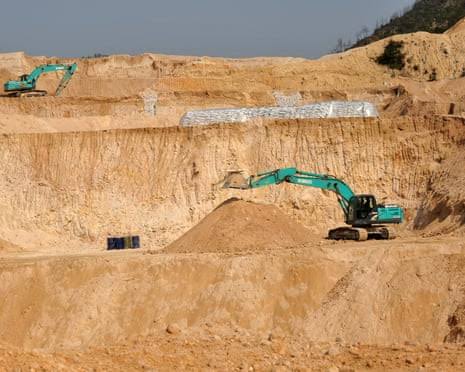
China will tighten its exit-entry rules from September 15 to stop experienced engineers from leaking knowhow in industries subject to export controls and deter tourists from visiting "high-risk" nations such as Japan.
The State Council's new regulation, which spans 19 articles and was announced on July 31, sets up a coordinated system to warn citizens of overseas risks, verify the purpose of each exit-entry application and tighten restrictions on both citizens and foreigners.
The regulation states that:
immigration and visa authorities can question applicants and demand documents or data to verify identity and travel purpose, and invitation letter issuers are liable for their authenticity;
citizens violating export control or technology trade rules or those who may endanger national industrial or technological security will be barred from leaving by commerce departments;
when processing travel documents and border checks, authorities must remind citizens headed to high-risk countries to travel cautiously, and may discourage travel to destinations under the highest-level warning;
those committing crimes abroad that harm national security face bans of six months to three years after returning (uthorities barring someone from leaving must notify immigration agencies and inform the person in writing of the facts, reasons and appeal channels, except where it could affect national security or a criminal probe);
agencies providing exit-entry intermediary services must register with local immigration authorities within 15 days of setup, with staff registered by their employers, and existing agencies must register within 90 days.
The export control clause does not name specific sectors, but Chinese commentators said it targets fields where Beijing has already imposed its own restrictions, including electric vehicle (EV) batteries, solar panels and rare earths.
"There are many situations that could endanger national security and interests, and it is hard to spell out every one of them in legislation," said Cheng Xiezhong, a legal scholar and professor at the China University of Political Science and Law. "The new regulation names one such situation, which is the violation of export control or technology trade management."
He says unauthorized exports of dual-use items or transferring key industrial technology abroad will fall under the provision of "causing harm to national security and interests" in Article 12 of the new exit-entry law.
"'May endanger' is one of the key phrasings in the regulation," says a Shandong-based columnist writing under the pen name "Xinghe Duke."
"It means the authorities won't wait until harm is done, but they will take precautionary measures. The wording of 'Decided by the commerce authority and other departments' means there is a lawful process. 'Barred from leaving' does not mean arrest; it just means the targeted person cannot leave the country."