










Breaking News
 Israel Vetoes Trump in the Middle East--Again
 Gen Z, the new 'Silent Generation,' swaps smartphones for dumb ones…
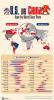 How The World Views China Vs The US In 2026
 Can Sam Altman Be Trusted Inside Your Home? Meet OpenAI's New Always-On Smart Speaker
Top Tech News
 What could possibly go wrong? Scientists use AI to design new viruses
 Dual-motor suitcase drive underpins 3,000-hp hypercar
 DoorDash Wins Federal Approval To Fly Its Own Delivery Drones
 Shade-Resistant Solar Cells Retain 97% Efficiency After 2,000 Hours of Testing
 20 Ancient Engineering SECRETS
 Stonehenge Was Reanalyzed by AI -- And the Findings Are Hard to Explain
 After Years Of Delays, Aptera Is Finally Preparing To Build Customer Cars
 'When you kill it, it doesn't die': the jellyfish that has cracked the secret of immorta
 Archer Aviation debuts Halo autonomous VTOL, Thunder's commercial twin
 US Telecoms Slide On Starlink Mobile Threat; Bernstein Sees It As A "Jab, But No Knockout Yet**



Gen Z, the new 'Silent Generation,' swaps smartphones for dumb ones…
They grew up with smartphones in their hot little hands, social media accounts before they were old enough to swim, and an entire childhood recorded, uploaded, ranked, liked, shared, and permanently part of every algorithm on the planet.
They were supposed to love every second of it… but that didn't happen.
A growing number of them are now trying to escape the tech lifestyle they were born into.
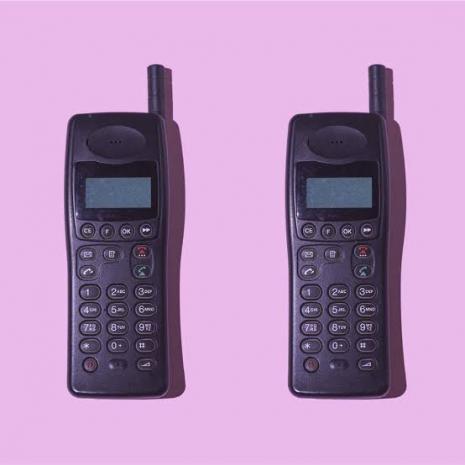
Young Americans are deleting apps, cutting back on screen time, getting rid of social media, and trading expensive smartphones for "dumb phones" that make calls, send texts, give directions, and play music.
Basically, they're paying to turn their iPhone into a 2004 Motorola Razr.
Can you blame them?
Silicon Valley promised us that constant connectivity would make all of us smarter, happier, more informed, and more connected.
But it turns out that was another lie. Because what it actually did was create a group of humans that can reach anyone on Earth in seconds, and now everyone is anxious about answering their phone.
Family and friendships have turned into content and clicks. When you make a bad post, it becomes this permanent scar on your public record, and every quiet moment you manage to squeeze in gets swallowed whole by non-stop notifications, doomscrolling, online fights, beauty filters, performance anxiety, and the constant pressure to prove that your life is way more exciting than it actually is.
Even boredom has become a thing of the past.
There's no sitting quietly in a waiting room anymore or staring out the window during a long drive.
Every empty second is now filled with content, and Gen Z has spent its entire life inside that tech machine.
And now many of them have had enough.
They're fine with having a phone, they just don't want to be ruled by the addiction machine anymore.
Kendall Schrohe remembers the moment she swapped her smartphone for a flip phone.
"For me, like the second that my iPhone was gone, it was just like heaven on earth," the 23-year-old Washington, D.C., resident told CBS News.
Schrohe is among the growing number of young people who are ditching their smartphones in favor of stripped-down "dumb phones" in an effort to unplug from social media amid concerns about the platforms' impact on mental health. Some also feel nostalgic for an era they never knew before the advent of mobile devices.
According to Pew Research, roughly half of U.S. adults in 2025 visited social media platforms like YouTube and Facebook at least once a day. Research from the American Psychological Association showed even higher usage among young people, with the average U.S. teen spending nearly five hours a day on social media, according to the group.
What is a dumb phone?
So-called dumb phones are a broad category. At one end are old-school flip phones, popular in the late 1990s and early 2000s, that handle calls and texts but little else. Then there are devices that use flip-phone hardware but integrate messaging and other apps. Another approach involves using smartphone technology that blocks social media.