










Breaking News
 The West's Answer To Break China's Tungsten Stranglehold...
 Rival Ukrainian Agencies In Lengthy Street Shootout, Officers Wounded
 Ford's $30,000 Fathom EV Truck Appears More Conventional Than Expected
 Xi's Egypt visit hints at China's larger African vision
Top Tech News
 Here's What to Expect as Air Taxis Actually Begin to Take Off
 'Wood Foam' Startup Uses Logging Waste as Substitute for Plastic, Producing 400 Pounds Daily
 How a Group of Young Men in 1933 Solved a Water Crisis in The Desert -- And Nobody Knows About It
 This American Battery Could Break China's Grip On The EV Supply Chain
 Tesla's Cybercab Launch Is Next Week. Here's What Tesla Still Needs To Prove
 800-passenger commercial plane boldly reinvents how we will fly
 Does Ultra-Fast Charging Ruin An EV Battery? BYD Did It 350 Times In 9 Days To Find Out
 Singapore is experimenting with biological computing using living human neurons...
 It's Happening - Europe is Building an Impossible Fusion Reactor
 Portable 1MW Kaleidos Microreactor Secures Critical Nuclear Fuel Deal Through 2030s



Overseas Book Review: The New Economics Of Technocracy
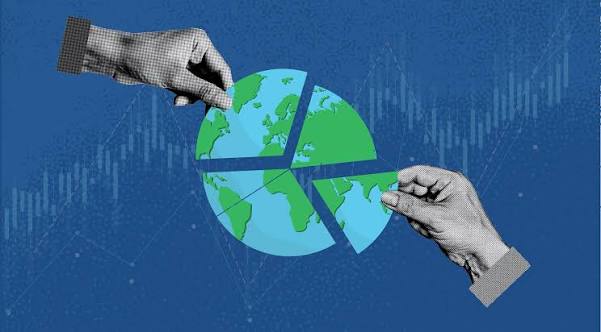
Technocratic elites regard humans as 'technoplastic beings' redefinable and modifiable by technology. This book takes up where the previous one left off, explaining what is now happening in real time. Mark Skidmore's endorsement is a good summary: 'the technocratic objective is to replace our current economy with a system built on programmable digital currency, asset tokenisation, artificial intelligence, and universal digital identity.'
The thirteen chapters cover a wide range of themes, starting with the hundred-year blueprint going back to the 1930s and the origins of technocracy, the death of debt and subsequent tokenisation of everything, privatisation of cryptocurrency, the nature of the so-called Board of Peace in relation to Gaza, the fit with Islamic finance, the significance of the Gulf corridor, digital identity as the final lock, AI as the control system, diminished national sovereignty, and the implications of this financial architecture moving faster than accountability and the law can follow. The logic of technocracy is 'the organisation of society by technical and financial experts, operating outside democratic accountability, advancing through crisis, and measuring human beings by their economic function rather than their created dignity.' This last point is critical as it repudiates the spiritual view of the human being by considering us as 'biological resources to be optimised, managed, and if necessary, financially excluded until they comply.' Extensive notes and references are provided throughout. One interesting background point for readers of this journal is that technocracy is underpinned by scientism (p. 7), and the original energy certificat template has been carried forward, 'adapted, and embedded into the architecture of global governance and economic control.' (p. x) Control in this context is rephrased as efficient management of resources, and inclusion is effectively enclosure. Digital money is tethered to digital identity.
Many people are aware of the unsustainability of national debt, which in the US is moving towards $39 trillion ($5.6 trillion in 2000) with annual interest payments of $980 billion. The ratchet effect of each crisis is a surging of debt whereby each recovery is financed with more borrowing. The solution proposed by the financial system is an asset-based digital currency, tokenised and programmable. It is crucial to understand the difference between a payment token and an asset token. Tokens are digital records on a computer network called a blockchain. A payment token is a digital coin that functions like money, while an asset token is speculative financial instrument representing a tiny fraction of, say, a property – so the first replaces your money, and the second your property. Holding a token is quite different from owning a property; the company that issues the tokens is the owner. Larry Fink of BlackRock has stated that tokenisation represents the next generation for markets where tokens are held in a digital wallet. A company called Securitize is minting Blockchain–native securities on the New York Stock Exchange digital platform.
This is where Trump and Witkoff families come in with USD1, a stablecoin issued by World Liberty Financial (WLF) and backed one-to-one by short-term US treasuries. 49% of the company is owned by Sheikh Tahnoun (pp. 61, 116), the UAE national security advisor. Embedded in such systems are three levels of control: programmable money, tokenised assets, and digital identity. As early as January 23, 2025, Trump signed an executive order establishing a pro stablecoin regulatory framework, then in March WLF formally announced the USD1. Fast forward to July 18, when President Trump signs the GENIUS act – the first comprehensive federal stablecoin legislation. Note that the president signs executive orders creating a favourable regulatory environment for stablecoins from which his family will reap benefit ('mint private dollars, collect real ones, park proceeds in Treasuries, pocket the yield. The public backed the debt. The oligarchs harvested the returns).' As Wood remarks, 'the conflict of interest is not a byproduct. It is the architecture' – where there is an interlock between monetary infrastructure, artificial intelligence, and surveillance technology. (p. 59) Wood notes that the US Constitution was designed to prevent exactly this kind of convergence between public authority and private enrichment – all beyond congressional approval.