










Breaking News
 Who Will Find What the Finders Hide? Addendum
 Seven Days in the Dark: How I Watched My Neighbors Turn Into Thieves...
 Oracle Invokes Force Majeure on Project Jupiter AI Data Center
 Something to Know About Saaaaaaafety
Top Tech News
 Tesla Model 3 killer charges from 10 to 97% in just 9 minutes
 World-first unpowered DNA computer sets speed record
 I Power 5 Buildings Off-Grid. Here's How
 The US government is pushing hard to get a working nuclear fission reactor into space by late 2028
 SpaceX Starmind AI in Space Radiator
 China Will Dominate Global Nuclear Energy Through 2035, Analyst Says
 These Absolutely Wild-Looking EVs Are Saudi Arabia's First Homegrown Cars
 BEYOND THE MOON: NASA plans a nuclear-powered fleet to push DEEPER into space
 Big Oil Backs Mazama's $135 Million Bet On Superhot Geothermal
 Quantum compass takes flight on Northrop's Lumberjack drone


Something to Know About Saaaaaaafety
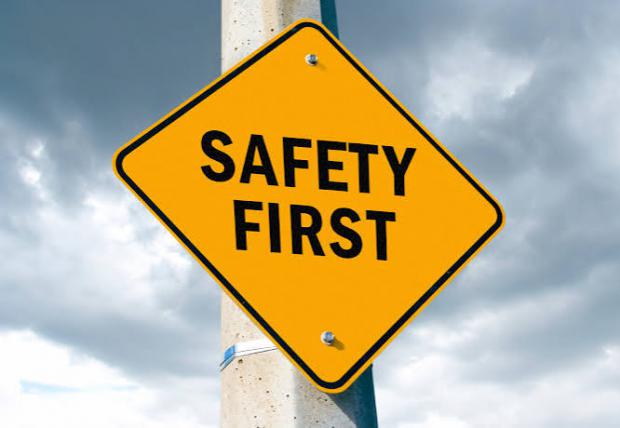
It's fear porn on wheels – because there's no such thing as an unsafe new vehicle. Or – for that matter – any vehicle built in decades.
When was the last time you heard about a car that became uncontrollable because the steering failed – or failed to stop because the brakes failed? Such a car would fit the definition of "unsafe" in the rational sense.
That is not the sense meant by saaaaaaaaaaaaaaaaaaaafety ratings.
These ratings equate "safety" with two things, chiefly. The first is crashworthiness, which is defined as impact resistance. This is not the same thing as crash-likeliness, which would qualify a vehicle as actually unsafe. To make the point: The '74 VW Beetle I drove for a few years during and just after college wasn't especially crashworthy – in the sense that it was relatively fragile. Its body was not designed to withstand tremendous impact forces; it was designed to be light so that the car would not need a big engine and so be easy on gas. If you ran into something, the relatively thin metal didn't offer a great deal of crash protection – and of course, the car had no air bags to cushion you from impact forces. This did not mean the car was crash-likely. In fact, it was a very controllable car, which is key to avoiding crashes. It was light and agile, which further reduces crash-likelihood, assuming the driver makes use of a vehicle's lightness and agility to avoid potential crash scenarios.
Of course, my '74 Beetle (and for that matter, my '76 Trans Am, which is much more heavily built and so much more crashworthy – in the saaaaaaaaaaafety sense) would be libeled as very "unsafe" by the standards used to rate the saaaaaaaaaaafety of new cars for a second reason, already hinted at: The absence of air bags and other saaaaaaaaaaaaaaaafety "technologies" such as Automated Emergency Braking (AEB) and eye-movement trackers. A car that hasn't got all of these things – the maximum possible/available – is sure to be libeled as "unsafe" or at least "less safe" than a car that does have all these things. This is fascinating to me, since I have been driving my 1976 Trans-Am for the past 30-plus years and haven't crashed it once. Despite it not even having first-generation saaaaaaaaaafety "technologies" such as anti-lock brakes or traction control. I never needed these "technologies" because I've never lost control of my Trans-Am, chiefly because it's controllable (in the sense that it doesn't handle unpredictably or suddenly veer off the road or fail to slow down when I push on the brake pedal).
Yet it is "unsafe" – per the bent definition of saaaaaaaaaaaaafety put forward by the Safety Cultists who've managed to do what Jim Jones, and the Reverend Moon never managed to do, which is to transform their once-aberrant little cult into a mainstream religion. Back when it was a cult, very few Americans considered cars such the old VW Beetle "unsafe." In fact, millions of Americans drove them regularly. Think about that. The same goes for cars like my '76 Trans-Am and also all the cars made say ten years ago. Do you realize that almost all circa 2016 model year vehicles would qualify for the "unsafe" libel if an attempt was made to sell the exact same car today? All it takes to qualify is to b;e slightly out-of-compliance with the roster of federal "safety" mandates that apply to all current model year cars. Three years from now – come 2029 – when the AEB mandate goes into effect – every vehicle made before the mandate went into effect that does not have AEB will join the ranks of the "unsafe."