










Breaking News
 Who Will Find What the Finders Hide? Addendum
 Seven Days in the Dark: How I Watched My Neighbors Turn Into Thieves...
 Oracle Invokes Force Majeure on Project Jupiter AI Data Center
 Something to Know About Saaaaaaafety
Top Tech News
 Tesla Model 3 killer charges from 10 to 97% in just 9 minutes
 World-first unpowered DNA computer sets speed record
 I Power 5 Buildings Off-Grid. Here's How
 The US government is pushing hard to get a working nuclear fission reactor into space by late 2028
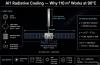 SpaceX Starmind AI in Space Radiator
 China Will Dominate Global Nuclear Energy Through 2035, Analyst Says
 These Absolutely Wild-Looking EVs Are Saudi Arabia's First Homegrown Cars
 BEYOND THE MOON: NASA plans a nuclear-powered fleet to push DEEPER into space
 Big Oil Backs Mazama's $135 Million Bet On Superhot Geothermal
 Quantum compass takes flight on Northrop's Lumberjack drone


Seven Days in the Dark: How I Watched My Neighbors Turn Into Thieves...
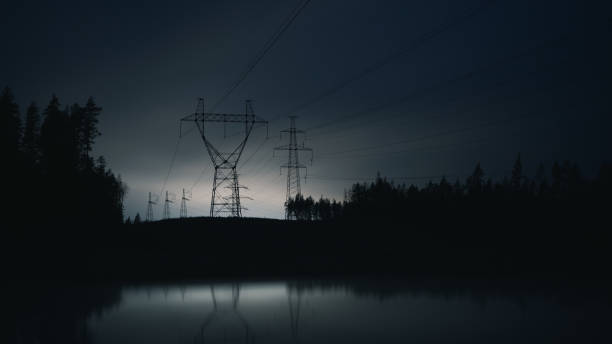
I don't know if you've ever lived through a major power outage, but I have. I live in a hurricane zone, so I suppose it was inevitable that I would eventually face the full wrath of nature's fury. The storm that hit us wasn't one of those headline-grabbing monsters that brings FEMA agents swarming in with cameras rolling and politicians posing for photo ops. It was what meteorologists call a "moderate" event—just strong enough to knock out infrastructure, just weak enough to be forgotten by the national media within 48 hours. But it took seven days for our power to return. Seven days. One hundred and sixty-eight hours. Ten thousand and eighty minutes of living in a world that suddenly resembled something from another century—or another dimension entirely.
You don't truly realize how much you need electric power until you're left without it. As a society, we are addicted to electricity in ways that would horrify our great-grandparents and confuse our ancestors. Pretty much everything we do uses electricity in one way or another, even activities we think of as analog, unplugged, or "natural." The water flowing from your tap? Electric pumps. The gas at the station? Electric pumps. The food in your refrigerator? Electric cooling. The money in your bank account? Electronic records. The safety of your neighborhood? Electric streetlights and surveillance systems. When the power goes out, you notice immediately. The sudden silence of a house without humming appliances is disorienting. The stillness feels like a presence, a weight. And the uncertainty—will it be hours? days? weeks?—creates a low-grade anxiety that simmers beneath every decision.
Looking at the way things are in California, Texas, and across the Midwest right now, extended power outages may be something we all need to get used to. The rolling blackouts that have become increasingly common aren't just due to isolated errors by utility companies or government mismanagement—though both play significant roles. They're symptoms of a grid infrastructure that was largely built in the 1960s and 1970s, designed for a population half its current size, and now being asked to handle loads and weather patterns that its designers never imagined. The government blames utilities for not properly maintaining their lines, while utility companies blame government regulations for forcing them to invest money that should have gone into maintenance into expensive green energy projects that haven't yet proven reliable at scale. Meanwhile, extreme weather events are producing more stress on this aging infrastructure beyond its breaking point. With the push for rapid decarbonization across the country, we may be entering an era where forced blackouts become as common in Ohio and Pennsylvania as they already are in California. Once the precedent is established—that utilities can simply shut off power to millions to prevent wildfires or manage peak loads—the dam has been opened. We could see forced blackouts anywhere in the country where there is risk of infrastructure failure, which is essentially everywhere.
I first noticed that the power failed when my computer suddenly shut off. The screen went black. The fan stopped whirring. The silence was immediate and absolute. This wasn't the first time this had happened—power outages in the middle of storms are fairly normal in my area. I figured the power would return within an hour or two, and in the meantime, I could have a snack, read a book, and watch the rain from my porch. But the power didn't come back on. As I sat there for hours, I began counting all the work I wasn't getting done, all the money I wasn't making, and all the deadlines that were slipping away into an uncertain future. In our hyperconnected economy, a day without power isn't just an inconvenience—it's a financial hemorrhage. Freelancers lose billable hours. Remote workers lose their connection to employers. Small business owners watch inventory spoil and revenue evaporate.