










Breaking News
 Who Will Find What the Finders Hide? Addendum
 Seven Days in the Dark: How I Watched My Neighbors Turn Into Thieves...
 Oracle Invokes Force Majeure on Project Jupiter AI Data Center
 Something to Know About Saaaaaaafety
Top Tech News
 Tesla Model 3 killer charges from 10 to 97% in just 9 minutes
 World-first unpowered DNA computer sets speed record
 I Power 5 Buildings Off-Grid. Here's How
 The US government is pushing hard to get a working nuclear fission reactor into space by late 2028
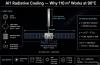 SpaceX Starmind AI in Space Radiator
 China Will Dominate Global Nuclear Energy Through 2035, Analyst Says
 These Absolutely Wild-Looking EVs Are Saudi Arabia's First Homegrown Cars
 BEYOND THE MOON: NASA plans a nuclear-powered fleet to push DEEPER into space
 Big Oil Backs Mazama's $135 Million Bet On Superhot Geothermal
 Quantum compass takes flight on Northrop's Lumberjack drone


Oracle Invokes Force Majeure on Project Jupiter AI Data Center

The move is designed to protect the company from financial obligations if regulatory, power, or other uncontrollable disruptions delay the 2.45-gigawatt facility beyond 2028. The project is a key component of the Stargate AI infrastructure program, a joint effort involving OpenAI, SoftBank (9984.T), and Oracle that was announced at the White House in January 2025 with pledges of up to $500 billion in U.S. AI investment.
The force majeure invocation comes as the project's approximately $18 billion construction financing has become difficult for arranging banks—including Santander (SAN) and Jefferies (JEF)—to syndicate to other investors. The loans are currently quoted at 89 to 91 cents on the dollar, according to market participants, representing a 9-11% discount to face value. That discount signals that credit investors are demanding a higher return to compensate for perceived risks, rather than indicating an imminent payment default. Oracle has not missed any payments, and the project has not been cancelled.
"This is a risk-allocation step, not evidence of a loan default," said one person with knowledge of the situation. "Oracle is trying to protect itself from delays that are outside its control."
A Test Case for AI Infrastructure
Project Jupiter is one of the largest data center projects in the Stargate portfolio, spanning roughly 1,400 acres and designed to supply computing capacity for AI training and inference workloads. But the project faces a complex web of permitting and infrastructure challenges. The New Mexico Supreme Court recently allowed paused air-quality and water-permitting processes to resume, rejecting procedural challenges from environmental groups. While that removes an immediate legal freeze, it does not grant the necessary permits or resolve the underlying environmental dispute.
Oracle has said the primary campus construction permits remain valid and that the physical data center campus does not require the contested air permit. The company also replaced an earlier conventional gas-plant concept with an onsite fuel-cell approach involving Bloom Energy (BE), arguing it would reduce water use and protect local air quality. However, the microgrid still needs regulatory review, and critics argue that gas-fueled generation would create significant emissions. The proposed Green Chile pipeline, which would supply gas to the site, has been delayed until at least early 2027, adding schedule risk.
"What institutional investors like us are really focused on is regulatory stability," said Andrea Valeri, Blackstone (BX)'s country chairman for Italy, speaking generally about infrastructure investments. "Italy in this regard has been on a very steady growth trajectory." His comments, made at a Bloomberg conference in Milan, underscore the importance of predictable regulation for large-scale projects.
Financial Pressures Mount
Oracle's broader financial picture illustrates the tension between soaring demand and the capital required to meet it. In its latest quarter, Oracle reported revenue of $19.3 billion, up 30% year over year, with its cloud infrastructure unit growing 121% to $7.4 billion. Remaining performance obligations—a measure of contracted future revenue—stood at $664 billion after the company signed more than $30 billion in additional AI cloud contracts during the quarter.
But the company's investment burden is enormous. Oracle spent about $28 billion in capital expenditures in the quarter and expects $90-95 billion in gross capex for the full fiscal year. Free cash flow was negative by roughly $5 billion, even as operating cash flow benefited from customer prepayments. The Project Jupiter financing discount suggests that credit investors are less willing than equity or technology customers to assume the buildout risk.
"We have a constant balance with the banks, which really we consider our partners and not only our binary competitors," said Cecile Mayer-Levi, head of private debt at Tikehau Capital (TKKHF), speaking about the Italian market. "It's much more of a convergence between the two solutions." Her comments highlight the collaborative approach needed to finance large infrastructure projects.