










Breaking News
 US Pulls Entire B-1 Supersonic Bombers From UK Base After Suspected Iran-Linked Terror Plot
 Russian Lab Worker's Abrupt Death Sparks Plague Crisis Concerns; Trump Team...
 Supreme Court To Hear Pivotal Climate Case With Billions At Stake
 84% Of Gen Z Democrats Back Socialism; New Poll Finds
Top Tech News
 Most artificial limbs rely on silicone or plastic to mimic human hands.
 Flying cell tower beams phone signal to Japan from 10 miles up
 Chinese Commercial Reactor Achieves Nuclear Fusion with Clean Hydrogen-Boron Fuel
 Med Beds Just Took a MASSIVE Step Forward, Healing People in Days!
 Palmer Luckey: Autonomous Weapons Are Ancient and Why Anduril Won't Build Humanoids | EP #295
 A laser just photographed objects through six feet of concrete
 Elon Musk's Next-Gen Motor Destroy Entire EV Industry
 China's disputed satellite refueling heralds new space war era
 BYD Will Put Solid-State Batteries In An EV Next Year: Executive
 FDA-cleared exoskeleton puts spinal-cord patients back on their feet



Supreme Court To Hear Pivotal Climate Case With Billions At Stake
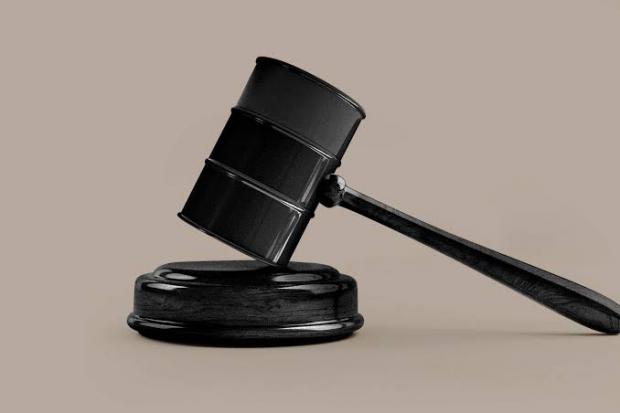
The question before the court, however, is not whether global warming theories hold water. It's whether local courts throughout the United States should have the authority to extract billions of dollars from energy companies for damage allegedly caused by global emissions.
The energy companies argue that giving such power to local courts would allow municipalities to effectively impose a massive nationwide carbon tax with the potential to bankrupt the U.S. energy industry.
Experts say the court's decision in this case could have a dramatic impact, both on U.S. energy production and on what Americans pay for oil, gas, and electricity.
"It is actually bigger than climate change," O.H. Skinner, executive director of the Alliance for Consumers, told reporters at a pre-hearing conference. "It's about [climate activists'] overall ability to weaponize courts to accomplish policy goals that are sweeping, that are multi-billion dollars in scale, and that could end up with an order that basically rewrites the American economy."
Boulder County originally brought its suit in 2018, charging that the products of Suncor, a Canadian energy company operating refineries in Colorado, and ExxonMobil, the largest U.S. energy company, caused climate-related damage, and that these companies concealed information about those risks.
The lawsuit argues that the defendants are liable under local tort laws for creating a public nuisance, trespassing, unjust enrichment, conspiracy, and failure to warn consumers that use of their products could cause extreme weather events.
In a brief supporting Boulder county's authority to apply local tort law, the American Association for Justice, a nonprofit legal group, wrote that "states have a manifest interest in both applying their own laws when their citizens are affected and in providing residents with a convenient forum for redressing injuries inflicted by out-of-state actors."
The energy companies, and their backers, including the Justice Department, counter that federal law, including the Clean Air Act, precludes, or preempts, state law because the emissions that allegedly cause global warming extend beyond state borders. The Supreme Court will separately consider whether it has jurisdiction to hear the challenge.
Claiming federal preemption, the Justice Department has sued Minnesota, Hawaii, and Michigan to block climate lawsuits brought in those states, and sued New York and Vermont over "polluter pays" climate superfund laws that seek to tax fossil fuel companies according to their CO2 emissions.
"When states seek to regulate energy beyond their constitutional or statutory authority, they harm the country's ability to produce energy and they aid our adversaries," Acting Assistant Attorney General Adam Gustafson said in a statement.