










Breaking News
 They Crashed Gold on Purpose (Here's the Real Debt Crisis Plan)
 Soaring diesel drives 16 trucking companies to bankruptcy
 Americans Are Turning To AI Chatbots For Voting Advice In Midterm Elections
 Seven apps. One craft
Top Tech News
 SHOCK CASE REPORT: Advanced Alzheimer's Patient Regains Speech, Memory, Mobility...
 Most artificial limbs rely on silicone or plastic to mimic human hands.
 Flying cell tower beams phone signal to Japan from 10 miles up
 Chinese Commercial Reactor Achieves Nuclear Fusion with Clean Hydrogen-Boron Fuel
 Med Beds Just Took a MASSIVE Step Forward, Healing People in Days!
 Palmer Luckey: Autonomous Weapons Are Ancient and Why Anduril Won't Build Humanoids | EP #295
 A laser just photographed objects through six feet of concrete
 Elon Musk's Next-Gen Motor Destroy Entire EV Industry
 China's disputed satellite refueling heralds new space war era
 BYD Will Put Solid-State Batteries In An EV Next Year: Executive



AI Geniuses Are Decidedly Not Policy And Economic Geniuses
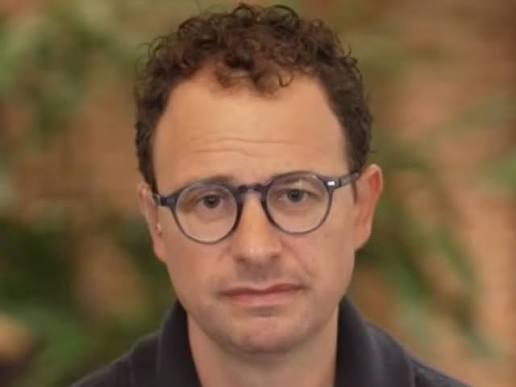
Authored by David McGarry via RealClearMarkets,
Geniuses are an odd species. To paraphrase Montesquieu, the exceptional are often also a bit loony. Cornelius Vanderbilt, a devotee of spiritualism, believed himself to have communicated with the spirit of George Washington. To improve his health, Henry Ford devoured weeds, and Thomas Alva Edison was averse to bathing. The point: geniuses are an odd species, who, for all the indispensability of their works to American prosperity and innovation, ought not be trusted credulously. Today in Washington, D.C., Congress must endeavor to protect artificial intelligence (AI) from the technologists most prominent in its creation.
Anthropic's Dario Amodei desires the U.S. government (an agent of compulsion) to dictate the "pace" of innovation, as the CEO wrote this month. "I have become convinced that fully addressing the risks requires even more prudence - not just investing in risk prevention, but pacing the rate of capabilities advancement so that risk prevention has time to keep up." Amodei warns of impending catastrophe should innovation continue at its current rate. Yet his company, the creator of what he supposes to be a tool of catastrophic potential, demands state-imposed fetters. Anthropic will institute some precautions, but not thoroughgoing "safety standards as well as limits on the rate of unchecked AI progress" - not until such standards and limits bind the entire industry. This means, in simpler terms, the kind of regulatory scheme Anthropic prefers - the kind that jars with the principles of antitrust law and would, as David Sacks notes, shelter the company's market share from the gales of competition.
The "prudence" of Amodei and the other pessimists is more rascally than genuine; it is an age-old propensity to see evil lurking in every major innovation and demand statism to manage it. The experience of the ages did not vindicate such assumptions when the printing press brought on a flood of "confusing and harmful" literature, when the typewriter displaced the human hand, or when the emergence of machines caused economist John Maynard Keynes, in the 1930s, to declare: "We are being afflicted with a new disease, technological unemployment."