










Breaking News
 IT'S OFFICIAL: Paramount Closes $81 Billion Warner Bros. Discovery Takeover...
 New Report Confirms Biden's DOJ Did Target Parents Who Spoke Out At School Board Meetings
 Nurse: Stillbirths Exploded After COVID Shots Hit Maternity Wards
 Explosion Rocks Venezuela's Second-Largest Refinery
Top Tech News
 Seven apps. One craft
 SHOCK CASE REPORT: Advanced Alzheimer's Patient Regains Speech, Memory, Mobility...
 Most artificial limbs rely on silicone or plastic to mimic human hands.
 Flying cell tower beams phone signal to Japan from 10 miles up
 Chinese Commercial Reactor Achieves Nuclear Fusion with Clean Hydrogen-Boron Fuel
 Med Beds Just Took a MASSIVE Step Forward, Healing People in Days!
 Palmer Luckey: Autonomous Weapons Are Ancient and Why Anduril Won't Build Humanoids | EP #295
 A laser just photographed objects through six feet of concrete
 Elon Musk's Next-Gen Motor Destroy Entire EV Industry
 China's disputed satellite refueling heralds new space war era



The Petrodollar Could Break Soon - And Upend The Global Financial System
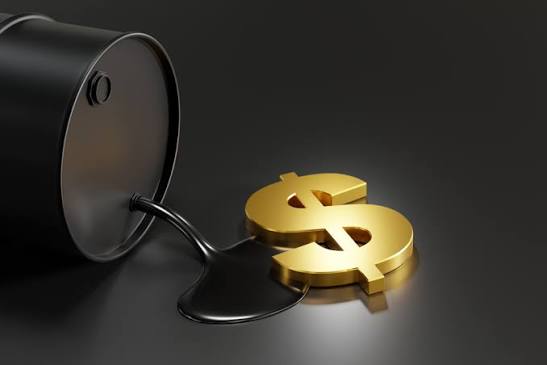
For more than 50 years, US protection of the Gulf monarchies has helped support global demand for dollars and US government debt. That bargain may now be coming under strain.
The concept is straightforward.
The US provides military protection to countries such as Saudi Arabia, Kuwait, the United Arab Emirates, Bahrain, and Qatar.
In return, these countries price much of their oil in US dollars and recycle large amounts of their oil revenue into US financial assets, including Treasuries.
Call it an alliance.
Call it a strategic partnership.
I prefer to call it a protection racket.
Whatever name you choose, the arrangement has provided enormous support for the dollar since Nixon severed its last link to gold in 1971.
Oil sits at the center of the global economy. Every industrial economy needs it. If countries need dollars to participate in the global oil trade, they have a powerful reason to hold dollars.
That creates demand for the currency that has nothing to do with buying American goods or services.
It also creates demand for US financial assets.
Oil exporters earn dollars. They need somewhere to put them. For decades, a large portion flowed back into US banks and Treasury securities.
That helped deepen the Treasury market, support the dollar, suppress US borrowing costs, and finance deficits that no other country could sustain.
But every protection racket depends on one thing:
The protector must provide protection.
The Iran war threatens that premise.
If the Gulf monarchies conclude that the US cannot protect their oil infrastructure, shipping lanes, cities, and regimes from Iran, why should they continue upholding their side of the bargain?
That question could reshape the international monetary system.
And one man warned almost exactly 20 years ago about the signal that would tell us this shift had begun.