










Breaking News
 IT'S OFFICIAL: Paramount Closes $81 Billion Warner Bros. Discovery Takeover...
 New Report Confirms Biden's DOJ Did Target Parents Who Spoke Out At School Board Meetings
 Nurse: Stillbirths Exploded After COVID Shots Hit Maternity Wards
 Explosion Rocks Venezuela's Second-Largest Refinery
Top Tech News
 Seven apps. One craft
 SHOCK CASE REPORT: Advanced Alzheimer's Patient Regains Speech, Memory, Mobility...
 Most artificial limbs rely on silicone or plastic to mimic human hands.
 Flying cell tower beams phone signal to Japan from 10 miles up
 Chinese Commercial Reactor Achieves Nuclear Fusion with Clean Hydrogen-Boron Fuel
 Med Beds Just Took a MASSIVE Step Forward, Healing People in Days!
 Palmer Luckey: Autonomous Weapons Are Ancient and Why Anduril Won't Build Humanoids | EP #295
 A laser just photographed objects through six feet of concrete
 Elon Musk's Next-Gen Motor Destroy Entire EV Industry
 China's disputed satellite refueling heralds new space war era



Forest Majeure: Finland Orders Google To Halt Work At Two Data Centers Less Than A Month After...
The data center delay contagion has officially gone global.
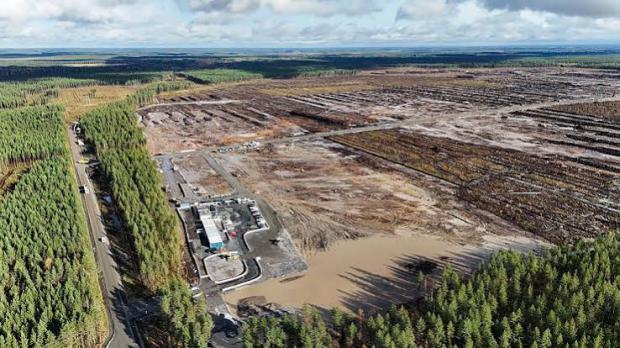
Just hours after we laid out how Oracle's 1.3GW Wisconsin campus became the next domino to slip after the indefinite delay of the company's New Mexico-based, Project Jupiter, and on the same day Google locked up 3.6GW of Constellation's nuclear output in PJM, Finland's Supervisory Agency (LVV) ordered a halt to construction work at two planned Google data centers, in Muhos and Kajaani, after more than 300 hectares of forest were cleared without a mandatory environmental impact assessment. The sites are part of the €13 billion ($15 billion) investment Google announced less than a month ago, which it billed as its largest single investment in Europe.
For those keeping count, that's two of Oracle's flagship Stargate campuses, SoftBank's SB Energy, a statewide halt in Texas, PJM's emergency power auction and now Google's biggest European project, all in the span of about three weeks. Which is why, having flagged the first Oracle data center delays back in December, we can now say with some confidence that the bottleneck in the AI buildout is no longer the chips. It's the permits.
420 Football Fields, Zero Assessments
According to the BBC, which first reported the order, the LVV found that work at one of the sites went ahead without the mandatory environmental impact assessment, and ordered Google's project company, Tuike Finland, to suspend all measures that would "significantly alter the environment" by October 23. Tuike has until October 14 to explain itself and lay out how it intends to proceed, failing which the agency says it could start enforcement proceedings. The work in question, per the LVV's head of environment Tommi Muilu, included felling trees, stripping topsoil, building site roads and storage areas, and rerouting ditches. In other words, everything you do before you build a data center.
The Helsinki Times adds that the banned list also covers excavation, blasting and crushing, and that the bulk of the clearing, more than 300 hectares, took place at the Leppiniemi site in Muhos, a town of roughly 8,800. For scale, the AFP pegged it at about 420 football fields. Under Finnish rules, converting more than 200 hectares calls for an environmental assessment before the chainsaws come out, which is the order in which these things are generally supposed to happen.
None of this came out of the blue. The Finnish Association for Nature Conservation first raised the alarm in September, and the LVV opened an investigation on September 19, at which point Google insisted the trees had been felled in "full compliance with the Forest Act." Two and a half weeks later, the message has changed somewhat: Google now says it has "fallen short of our own high standards in this instance" and will follow the agency's guidance, while still maintaining it acted in good faith and promising to replant trees across 130 hectares at Muhos.