










Breaking News
 FDR Made Owning Gold Illegal in 1933 - So What Happened to Americans' Gold?
 Bad News Poll: Most Think Trump Using Presidency As Piggy Bank
 I Built a Website to Expose Solar and Battery Scams
 I Prepped for 16 Years. Nothing Prepared Me for AI
Top Tech News
 Anduril's plan to save US sub edge from China's undersea surge
 Researchers Develop AI 'Mind-Reading' Tool That Reconstructs What Your Eyes See
 Video: Dexterous robot hand learns the delicate art of silk embroidery
 The computer that can read your mind:
 Seven apps. One craft
 SHOCK CASE REPORT: Advanced Alzheimer's Patient Regains Speech, Memory, Mobility...
 Most artificial limbs rely on silicone or plastic to mimic human hands.
 Flying cell tower beams phone signal to Japan from 10 miles up
 Chinese Commercial Reactor Achieves Nuclear Fusion with Clean Hydrogen-Boron Fuel
 Palmer Luckey: Autonomous Weapons Are Ancient and Why Anduril Won't Build Humanoids | EP #295



FDA proposed rule would allow toxic chemicals in food, advocates alarmed
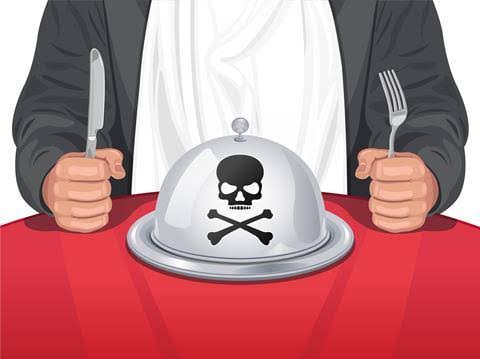
The Food and Drug Administration is quietly proposing to expand a controversial regulatory loophole that would allow some of the world's most toxic chemicals to be added directly to food without safety review, according to a report published Oct. 10. The "threshold of regulation" exemption currently permits dangerous compounds in food contact materials like packaging if they are not carcinogenic and present at levels below 0.5 parts per billion. But the new proposal would allow these chemicals as direct food ingredients—flavorings, preservatives, emulsifiers and processing aids—in ultra-processed products. The revelation comes as Robert F. Kennedy Jr. and the FDA declared victory for "closing" a different regulatory loophole called "generally regarded as safe," yet the proposed rule submitted to the Federal Register includes the TOR expansion without public mention, prompting accusations of deception and raising fundamental questions about federal commitment to food safety.
The science of harm: Why low levels don't mean safe
The fundamental flaw in the TOR expansion lies in its definition of "appreciable risk," public health advocates argue. The proposed rule states any substance used in food will be exempted from regulation if there is "no appreciable risk to human health," but the problem rests in how that risk is calculated. Chemicals like perchlorate, certain phthalates, bisphenols, PFAS "forever chemicals" and flame retardants are not classified as carcinogenic, yet they can cause harm at doses far lower than 0.5 parts per billion.
Independent food consultant Maricel Maffini, who worked on TOR issues, noted that many ingredients at very low levels cause serious issues in the body—particularly those that disrupt the endocrine system. The FDA's own data from 2017 showed perchlorate levels increased in children's cereal after the agency approved its use in grain bags through the TOR exemption. Perchlorate reduces the thyroid gland's ability to produce hormones essential for proper brain development, with very low levels linked to lower IQ scores in children.
The rule also fails to account for cumulative effects from multiple chemical exposures, which scientists say could explain rising rates of chronic disease over recent decades.
The perchlorate warning: A story of regulatory failure
The case of perchlorate in children's cereal serves as a stark warning about the TOR exemption's dangers. In 2005, German chemical giant BASF used the loophole to exempt perchlorate from regulations for use in "super sacks"—one-ton polypropylene storage bags used on farms to transport grains. When grains are loaded into and emptied from these bags at high velocity, perchlorate and microplastics break off and contaminate the food.
FDA data published in 2017 showed the number of baby food dry cereal samples containing perchlorate increased from 5% to 15% after the 2005 TOR exemption. One sample of baby food dry rice cereal contained 173 parts per billion—far exceeding the maximum 11 ppb found before the exemption. Yet six months after publishing this data, the FDA reapproved perchlorate for use in super sacks, relying on flawed science that ignored the specific findings in children's food.