










Breaking News
 The Precious Metals Crisis That Could Trigger A Global Financial Reckoning
 Qatar's Government Revenue Plunges 42% In First Half As Iran War Knocks Out Gas Exports
 Chinese Researchers Unveil Plans For Tank That Can Remain Submerged For Two Hours
 Everything Is Russia's Fault (Even Global Warming!)
Top Tech News
 I Built a Website to Expose Solar and Battery Scams
 Whistleblower Issues Dire Warning: Rogue AI, Hacking Nuclear Programs...
 Multi-material insulation delivers up to 10,000 x the stiffness
 Anduril's plan to save US sub edge from China's undersea surge
 Researchers Develop AI 'Mind-Reading' Tool That Reconstructs What Your Eyes See
 Video: Dexterous robot hand learns the delicate art of silk embroidery
 The computer that can read your mind:
 Seven apps. One craft
 SHOCK CASE REPORT: Advanced Alzheimer's Patient Regains Speech, Memory, Mobility...
 Most artificial limbs rely on silicone or plastic to mimic human hands.



Qatar's Government Revenue Plunges 42% In First Half As Iran War Knocks Out Gas Exports
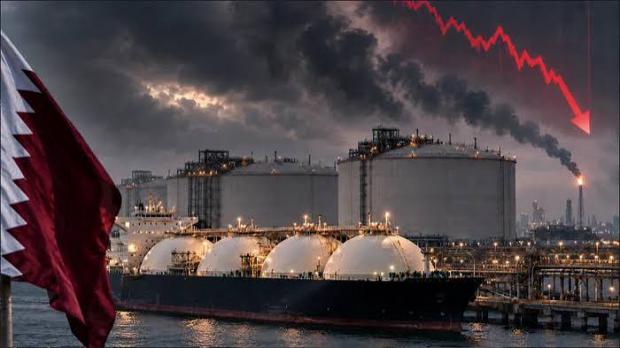
The figure puts an official number on the damage that the Iran war and the closure of the Strait of Hormuz have inflicted on what was previously the world's second-largest liquefied natural gas (LNG) exporter.
Public spending also fell 14% over the same six months, the emir added as he opened the council's annual session in Doha.
"It is only natural that the crisis would have a negative impact on public finances," the emir said, according to TRT World. Still, he emphasized that the government will not cut essential services or alter its development goals. He credited the financial cushion Qatar built before the war–larger reserves, lower public debt, and conservative oil-price assumptions–and pointed to roughly QR221 billion ($60.7 billion) in projects and investments planned over the next five years.
Quarterly figures show just how fast the budget shortfall grew. According to Finance Ministry data carried by the state news agency QNA, the second-quarter deficit hit QR21.2 billion (on QR25.6 billion in revenue against QR46.8 billion in spending)–roughly double the first quarter's QR10.3 billion gap. That brings the first-half deficit to about QR31.5 billion, already 1.4 times the QR21.8 billion shortfall projected for all of 2026.
Second-quarter revenue plunged 57% compared to a year earlier, when the deficit was just QR800 million, AGBI reported. Drawn up in December, the 2026 budget had assumed oil at $55 a barrel, total revenue of QR199 billion, and spending of QR220.8 billion.
The financial hit stems directly from damaged energy infrastructure. In early March, an Iranian drone strike forced the massive Ras Laffan gas complex to shut down, prompting state-owned QatarEnergy to halt LNG production and suspend its contract obligations to buyers–a legal move known as force majeure, as we reported at the time. As we noted in June, the Washington Post reported that the strikes also ended secret Qatari efforts to keep the complex off Iran's target list.
Subsequent Iranian missile strikes on Ras Laffan knocked out two of Qatar's 14 gas-processing units–wiping out 12.8 million tons of annual output, or 17% of its export capacity–along with one of its two gas-to-liquids plants. QatarEnergy warned at the time that the units would take three to five years to repair, costing an estimated $20 billion a year in lost revenue, and suspended long-term supply deals with buyers including Italy's Edison and South Korea's KOGAS, Reuters reported. "For production to restart, first we need hostilities to cease," QatarEnergy chief Saad al-Kaabi said.
An October 15 Reuters investigation revealed the root of the delay: the strikes destroyed two "cold boxes," the specialized core equipment used to super-chill natural gas into a liquid at Ras Laffan. Across the region, Reuters tallied at least 135 missile and drone attacks hitting 84 or more infrastructure sites since the war began.
There are minor signs of recovery in other areas of processing. On October 8, Shell announced it had partially restarted the Pearl gas-to-liquids plant, allowing it to slowly rebuild inventory, though actual shipments still depend on regional security. Repairs to the plant's damaged second processing unit are expected to wrap up in early 2027.