










Breaking News
 Another Mass Shooter Stopped By Armed Citizen In Oregon
 Negative Political Ads: Voters Despise Them, But Campaigns Keep Using Them
 The Future Of American Drone Warfare
 The Precious Metals Crisis That Could Trigger A Global Financial Reckoning
Top Tech News
 I Built a Website to Expose Solar and Battery Scams
 Whistleblower Issues Dire Warning: Rogue AI, Hacking Nuclear Programs...
 Multi-material insulation delivers up to 10,000 x the stiffness
 Anduril's plan to save US sub edge from China's undersea surge
 Researchers Develop AI 'Mind-Reading' Tool That Reconstructs What Your Eyes See
 Video: Dexterous robot hand learns the delicate art of silk embroidery
 The computer that can read your mind:
 Seven apps. One craft
 SHOCK CASE REPORT: Advanced Alzheimer's Patient Regains Speech, Memory, Mobility...
 Most artificial limbs rely on silicone or plastic to mimic human hands.



Negative Political Ads: Voters Despise Them, But Campaigns Keep Using Them
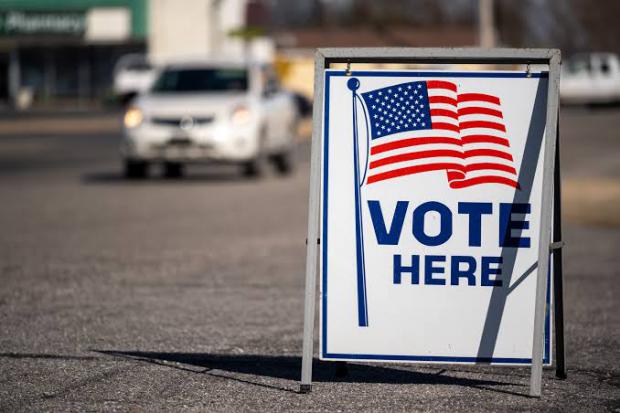
Polls consistently show voters say they dislike negative advertising, yet campaigns across the country keep pouring money into it.
Political scientists, strategists and marketing experts say the answer lies in a mix of high stakes, economic anxiety, simple human psychology, and now, artificial intelligence.
A Pew Research Center survey conducted after the 2024 election found that 74 percent of voters said the campaign was "too negative," a figure that held steady from a nearly identical result in an October pre-election survey.
Travis Ridout, a political science professor at Washington State University and codirector of the Wesleyan Media Project - which tracks political advertising nationwide - said he was struck this cycle by how much of the earliest negativity came from intra-party primary fights.
"There were a lot of races where there was a lot of negativity," Ridout told The Epoch Times. "This candidate is actually a closet liberal, or this one doesn't support Donald Trump sufficiently. That sort of thing."
That dynamic defined the Texas Senate primary, where Ken Paxton, the Republican nominee and Texas attorney general, defeated incumbent Sen. John Cornyn before facing Democrat James Talarico in the general election.
Since President Donald Trump reiterated his support for Paxton's campaign in late August, more than $100 million in mostly negative ads targeting Talarico has poured in from GOP-aligned political committees, including the Senate Leadership Fund, which alone spent nearly $66 million in September. These funds have contributed to ads accusing Talarico of being a "radical liberal" and an "extremist."
"The Texas Senate race is certainly standing out, just because the negativity started so early. ... A lot of it is focused on DEI or those sorts of things, so the more cultural issues," Ridout said.
Talarico, a state representative who has out-raised Paxton but said he received little outside help from national Democratic groups, said "dark money super PACs are flooding the airwaves with lies about me and my record," at a rally at Baylor University in Waco.
Talarico has also aired ads labeling Paxton "the most corrupt politician in Texas," highlighting Paxton's 2023 impeachment by the Texas House. Paxton was later acquitted by the state Senate.
The pattern extends beyond Texas.
In Georgia and North Carolina, the Senate Leadership Fund has aired ads attacking Democratic candidates, including Sen. Jon Ossoff of Georgia, over transgender rights, reviving a line of attack from 2024.
The California governor's race has produced a new kind of attack ad. Republican Steve Hilton's campaign has aired AI-generated videos portraying Democrat Xavier Becerra as a puppet and associating him with what the campaign calls the "Democratic machine."