










Breaking News
 Hedge Fund CIO: "By The Time These Things Are Glaringly Obvious, It's Too Late, Checkmate**
 IRGC Again Warns Trump: If US Bombing Renewed "World Will Face Serious Energy Crisis"
 French Bonds, Stocks Drop As Far-Left, Migrant Riots Worsen; Macron Fails To Restore Order
 Everyone knows...
Top Tech News
 Bioinspired robot airdrops into remote waters via morphing wing-sail
 Anduril interceptor adapts to emerging threats via swappable stages
 I Built a Website to Expose Solar and Battery Scams
 Whistleblower Issues Dire Warning: Rogue AI, Hacking Nuclear Programs...
 Multi-material insulation delivers up to 10,000 x the stiffness
 Anduril's plan to save US sub edge from China's undersea surge
 Researchers Develop AI 'Mind-Reading' Tool That Reconstructs What Your Eyes See
 Video: Dexterous robot hand learns the delicate art of silk embroidery
 The computer that can read your mind:
 Seven apps. One craft



France is burning: The dangerous convergence of the radical Left and Islamist extremism
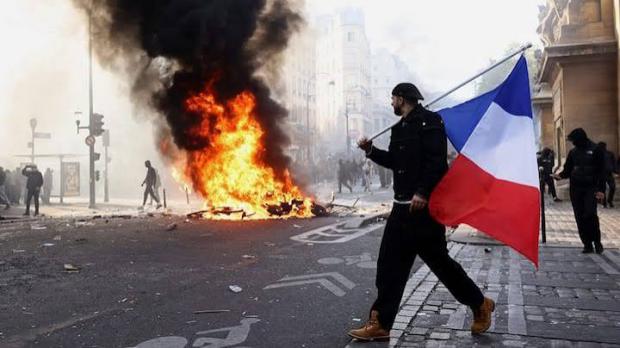
On Saturday, as France's descent into disorder reached its violent crescendo, with street battles, organised looting and buildings in flames, the British Broadcasting Corporation (BBC) offered a remarkably sanitised account of the mayhem. Its report began thus: "Violence broke out across France… against hardship in schools and the cost of living".
The unsuspecting reader could be forgiven for imagining a desperate populace, deprived of basic schools and economic dignity, rising against an indifferent, predatory state. But when protest degenerates into arson, pillage, and attacks upon the institutions of civilised life, the vocabulary of socio-economic grievance begins to sound suspiciously like an alibi.
When schools themselves become targets of a movement ostensibly demanding educational reform, an inconvenient question arises: was education ever the real grievance, or merely the pretext for something altogether more sinister?