










Breaking News
 The Trump White House is starting to admit that your bank account and airline tickets...
 iCloud, App Store, and other Apple services hit by ongoing outage
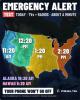 Every TV and radio in the country is going to play the emergency alert tone today. Your phone won
 China used more coal in just four years than the entire world did in the coal-heavy 19th century
Top Tech News
 SpaceX Just Caught Starship on Its FIRST Attempt!
 Solid-State Cells Can Make The U.S. Competitive In Batteries Again: CEO
 Jetson ONE personal eVTOL pod is about to go full sky patrol
 America's INSANE BREAKTHROUGH Could Replace Septic Tanks Forever
 Amazing DIY Building Material for Home & Yard - Inexpensive and Easy!
 Researchers have discovered a massive deposit of hidden water...
 Amazon's Ring Unveils Flying Drone And Robot To Patrol Homes And Businesses
 Anthropic Strikes $3.4 Billion Off-Grid Power Agreement to Bypass U.S. Grids, Reports Say
 The X-ray room just shrank to the size of a laptop
 Gritt and MasTec partner to bring physical AI to solar construction sites



Cynicism Should Win the Mid-Term Elections
Any hope that elections would safeguard the Constitution should have perished after 9/11. Consider the race for a US Senate seat in Michigan. Democratic candidate Abdul El-Sayed talks as if the Second Amendment only protects Americans' right to own the type of antique flintlock muskets used to fight the British Army at Yorktown. Republican candidate Mike Rogers has devoted his congressional career to championing the Deep State and obliterating the Fourth Amendment's prohibition on warrantless unreasonable searches. After Edward Snowden exposed a vast National Security Agency crime spree, Rogers exonerated Uncle Sam's secret surveillance: "You can't have your privacy violated if you don't know your privacy is violated."
But whoever Michigan voters send to the Senate will take an oath to uphold and defend the Constitution, right? As former US senator Bob Kerrey explained in 2013, "The problem is, the second your hand comes off the Bible, you become an asshole."
Denouncing cynicism is an anesthetic the political elite inject to stifle hostile reflexes. When California Gov. Gavin Newsom addressed the United Nations' "High-level Event on Climate Action and Just Transition" (hey, I didn't make up that name), he hailed the lackeys in the audience: "Thank you for being the antidote to that cynicism, fear, and anxiety." Newsom's environmental mandates pointlessly impoverish Californians but assure him deity treatment in the media.
Americans are schooled to trust the regimes that domineer their lives. But that storyline becomes harder to prop up each time the political parties rotate power in Washington.
In modern American history, the most audacious liars have been the greatest self-proclaimed enemies of cynicism. "The only deadly sin I know is cynicism," declared President Lyndon Johnson in a 1967 press conference on how the Vietnam War was going great. In a 1973 nationally televised speech, President Richard Nixon declared, "I reject the cynical view that politics is inevitably, or even usually, a dirty business" before deluging viewers with false claims on the burgeoning Watergate scandal.
In 1994, President Clinton derided citizens who "indulge themselves in the luxury of cynicism" for betraying the American soldiers who died on D-Day in 1944. In 1997, Clinton declared that people can make America "better if we will suspend our cynicism." This is the Peter Pan theory of public service: if only people believed government has magical powers, politicians could achieve miracles. After his impeachment, Clinton castigated "fashionable cynicism" as "self-indulgent arrogance that has no place in America." But it wasn't cynics' fault that Clinton helped make presidential candor an endangered species.
George W. Bush exploited the revulsion against Clinton, promising America "a fresh start after a season of cynicism" when he launched his presidential campaign in 1999. In his first inaugural address, President Bush touted positive thinking about politicians as civic duty, lecturing Americans on their "calling" to make a "determined choice of trust over cynicism." In the same 2002 State of the Union where he uncorked "the Axis of Evil" to pave the way to war with Iraq, Bush declared, "Deep in the American character, there is honor, and it is stronger than cynicism." Bush repeatedly rebuked the cynicism of anyone who refused to cheer his invasion of Iraq.