










Breaking News
 Little Marco Makes a Big Mess in Iran
 Ravens Bench Star Cornerback Marlon Humphrey After He Jokes Baltimore Is...
 Trump's Strategic Blunder in Calling Putin and Xi "My Friends"
 Aptera builds first production solar car that adds up to 40 miles daily from sunlight
Top Tech News
 Extraterrestrial habitats may rise via Legos of laser-fused moon dust
 Battery-only 19-seater puts China in the electric airliner race
 Dream Chaser space plane gets landing approval for debut mission in 2027
 SpaceX Just Caught Starship on Its FIRST Attempt!
 Solid-State Cells Can Make The U.S. Competitive In Batteries Again: CEO
 Jetson ONE personal eVTOL pod is about to go full sky patrol
 America's INSANE BREAKTHROUGH Could Replace Septic Tanks Forever
 Amazing DIY Building Material for Home & Yard - Inexpensive and Easy!
 Researchers have discovered a massive deposit of hidden water...
 Amazon's Ring Unveils Flying Drone And Robot To Patrol Homes And Businesses



Trump's Strategic Blunder in Calling Putin and Xi "My Friends"
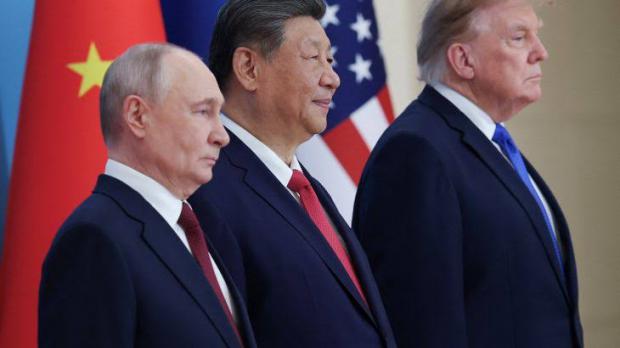
The much-hyped trilateral meeting between Trump, Xi, and Putin has happened. There is not a lot to take away in terms of actual policy. The three leaders did not speak to the press afterwards, and we will probably never know what was said or agreed upon in private. It is my experience reporting on other international summits that the most interesting things happen behind closed doors; what happens in front of the camera is mostly theatre.
However, that theatre is not meaningless. World leaders know that it is as important to seem like one as to be one. Therefore, the optics of what is presented become a symbolically charged text that commentators rip apart in order to try to understand what was not reported. The joint declaration of the trilateral meeting is one of those theatrical pieces.
It is, of course, very abstract and carries no concrete application, but the themes touched upon are significant. Since this one is rather short, I will copy it here before doing what commentators do:
1. As permanent members of the United Nations Security Council, China, Russia, and the United States committed to reform the U.N. so that the U.N. can respond more effectively to global challenges and conform to its fundamental mission of international peace and security.
2. The three countries plan to increase the production and supply of refined petroleum products for the benefit of all nations. They reaffirmed the importance of stable energy flows.
3. The three heads of state recognized that the principle of state consent and respect for immunities of state officials are of paramount importance, and concurred that the International Criminal Court and other similar bodies must not abuse their jurisdiction.
4. The three heads of state reaffirmed that a nuclear war cannot be won and must never be fought. The three countries will conduct a dialogue on reducing nuclear risks and preventing the proliferation of nuclear weapons.
I would say that the first point was proposed by China. China is an internationalist country. It needs a stable order so that it can trade and sell things to others; it is the basis of its economy. The U.N., although mostly ineffective, is seen as the best existing institution to serve that purpose. If reformed to lessen the weight of the West in it, it could be a useful instrument. That has been a constant call from the BRICS summits: not to abolish it, but to reform it.