










Breaking News
 Little Marco Makes a Big Mess in Iran
 Ravens Bench Star Cornerback Marlon Humphrey After He Jokes Baltimore Is...
 Trump's Strategic Blunder in Calling Putin and Xi "My Friends"
 Aptera builds first production solar car that adds up to 40 miles daily from sunlight
Top Tech News
 Extraterrestrial habitats may rise via Legos of laser-fused moon dust
 Battery-only 19-seater puts China in the electric airliner race
 Dream Chaser space plane gets landing approval for debut mission in 2027
 SpaceX Just Caught Starship on Its FIRST Attempt!
 Solid-State Cells Can Make The U.S. Competitive In Batteries Again: CEO
 Jetson ONE personal eVTOL pod is about to go full sky patrol
 America's INSANE BREAKTHROUGH Could Replace Septic Tanks Forever
 Amazing DIY Building Material for Home & Yard - Inexpensive and Easy!
 Researchers have discovered a massive deposit of hidden water...
 Amazon's Ring Unveils Flying Drone And Robot To Patrol Homes And Businesses



Little Marco Makes a Big Mess in Iran
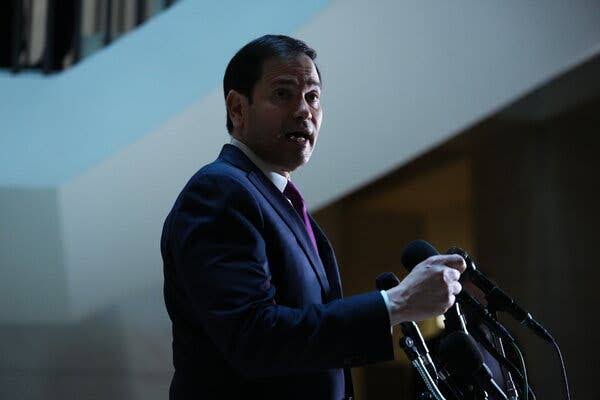
Last Thursday, President Donald Trump officially backed the Rubio strategy on the Iran War. This week, the Iran War devolved into more chaos and violence, raising risks of a return to all-out war.
That's not a coincidence. The current strategy, promoted by Secretary of State Marco Rubio, is to intensify the U.S. economic pressure campaign—comprising a naval blockade and sanctions—in hopes that Tehran will capitulate if not collapse. But experts told The American Conservative that Iran is more likely to lash out than back down. The experts, it turns out, were right.
The Islamic Republic has escalated strikes on vessels in the Strait of Hormuz and on Wednesday attacked U.S. assets in Bahrain and Kuwait following American strikes on Iran's Qeshm Island—the first attack on America's air base in Kuwait since September. On Tuesday, Iran had targeted a U.S. radar system in Bahrain in retaliation for an attack on Iranian communication towers. Clearly, America's pressure campaign entails low-grade military action—a blockade, after all, is an act of war—that provokes Iranian counterattacks and an escalation spiral.
The extent of the damage done by the latest Iranian attacks remains unclear, with the governments of Kuwait and Bahrain claiming to have intercepted them. U.S. Central Command (CENTCOM), which tends to downplay enemy success, notably didn't deny Iran's most recent claims to have struck American assets. And some open-source intelligence accounts surfaced evidence—including an apparent U.S. medical evacuation flight out of the region—that Iran had inflicted casualties. (That claim CENTCOM has denied.) As the Iranian blitz was ongoing, such accounts shared videos that seemed to show U.S. military structures set ablaze.
Blowback from the war may even have reached American shores. On Wednesday, Homeland Security Secretary Markwayne Mullin admitted in written testimony to Congress that Iran-linked actors have targeted critical U.S. infrastructure, including water systems, since the war began in late February. Supposedly, recent technical outages at the Federal Aviation Administration, the National Security Agency, and U.S. banks were unrelated to Iranian cyber attacks. But the apparent degradation of America's digital infrastructure has frightened the general public.
Nearly nine months into a conflict that Trump had expected to last weeks if not days, the tit-for-tat strikes and revelation of Iranian hybrid warfare proved not only that the U.S. is still at war but that the president has lost control of escalation dynamics. As Tehran continues to insist—and as TAC has repeatedly warned—the "neither war nor peace" state of limbo that Trump now favors risks the resumption of major hostilities, regardless of his intentions.