









Breaking News
 Inflation Is Rising, but What Can the Fed Actually Do?
 From Operation Ajax to Epic Fury: Why Washington Keeps Getting Iran Wrong
 U.S. Hawks Seek To Escalate Across Multiple Fronts
 Near Certainty Vera Rubin Found a Pluto Like Dwarf Planet
Top Tech News
 Meet the Frankenhamster: Scientists create bizarre 'planimal' by fusing together hamster and
 Roof-mounted solar panels turn your EV into its own charging station
 Russia 'is preparing to launch nuclear-armed space weapon by the end of this year'...
 Underground empire: China's plan to weaponize infrastructure gear
 $21,500 pickup plans to fix the American truck problem
 Seven Down, Three To Go: America's Microreactors Keep Going Critical
 Smart Dust
 Artificial Intelligence Could Transform Bank Runs From Hours-Long Crises...
 We Can't Put AI Back in the Box… So We Must Make It Serve Pro-Human Interests
 Dubai Just Finished the World's First Permanent Air Taxi Route: Airport to the Marina in Under 1



U.S. Hawks Seek To Escalate Across Multiple Fronts
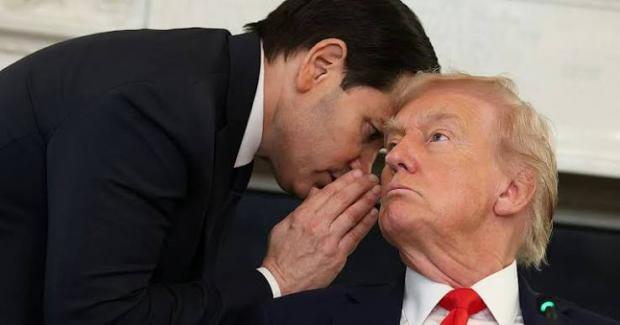
The president's approval ratings were already low, and though he occupied the spotlight at Shenzhen, all he got for his trouble was a set of anodyne declarations that changed nothing.
The wars in Iran and Ukraine are still at a simmer—though the flames are gradually being turned up. Add to this the intensifying pressure from within the United States for techno-industrial confrontation with China, and you have the makings of an impending polycrisis.
For Trump, these conflicts are damaging to his legacy, and they put him in a complicated bind. On the one hand, he presents himself as hoping for a deal by which to exit these conundrums; yet at the same time, he wants the deal to produce a decisive and definitive ending. But lacking either a deal or operational finality, he procrastinates.
Trump appears to think he can let Iran "stew" for a while. On Ukraine, however, Trump is allowing the Russia hawks to "pressurize" Moscow to acquiesce to U.S. terms—namely, to agree to a ceasefire.
Yet elsewhere in Washington, the Russophobes and China hawks are not procrastinating; they are in the ascendant. The noise coming from Democrats ahead of the new Congress assembling in January suggests escalation—for increased pressure on Trump, on Putin, and on Russia. At the same time, we've seen a shift taking place on Iran: CENTCOM is seemingly provoking Iran through a series of sporadic firefights, and Secretary of State Marco Rubio has denigrated Vice President J.D. Vance's diplomatic efforts. Trump even appeared the other week to divert Vance to domestic issues.
One read is that power is shifting to a current represented by the hawkish Rubio, who seems of late to have openly embraced the notion that might makes right.
Further escalation seems inevitable. Russia will respond to recent attacks on the Kerch bridge in Crimea, as well as what it sees as provocations around Kaliningrad. Israel's Prime Minister Benjamin Netanyahu may be scheming to bring a unity government into being on the basis of war with Iran. Tehran, for its part, could decide to challenge the U.S. blockade, thereby cornering Trump into launching what may well be a devastating kinetic catharsis that will reconfigure the region.
It is, however, in what I call the "War of AI Attrition" that Trump almost suffered his biggest recent setback: The Trump favorite Jensen Huang, Nvidia's CEO, was briefly toppled by an (improbable) spy "scandal" reportedly contrived by the China-hawk fraternity, pushed by Rubio, and supported by Treasury Secretary Bessent and others in the U.S. national security strata. Only the president's direct intervention restored the ousted CEO to his position at the top of the company.
Trump's policy of friendly relations with China was very nearly overturned at a stroke—Huang had been the main advocate for selling Nvidia chips and off-shore compute to China. Even after Huang's return, it is not clear what the long-term effects on policy will be. Judging from the statements of American legislators, the tide is turning toward tech trade attrition against China: Hawks seek to close off Nvidia's access to the Chinese market as part of their broader effort to dig a national security moat around America's "AI family silver." The leading AI companies' positions will be bolstered by legislation (and possibly direct government stakes, as necessary).