





Breaking News
 Inflation Is Rising, but What Can the Fed Actually Do?
 From Operation Ajax to Epic Fury: Why Washington Keeps Getting Iran Wrong
 U.S. Hawks Seek To Escalate Across Multiple Fronts
 Near Certainty Vera Rubin Found a Pluto Like Dwarf Planet
Top Tech News
 Meet the Frankenhamster: Scientists create bizarre 'planimal' by fusing together hamster and
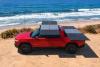 Roof-mounted solar panels turn your EV into its own charging station
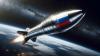 Russia 'is preparing to launch nuclear-armed space weapon by the end of this year'...
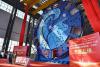 Underground empire: China's plan to weaponize infrastructure gear
 $21,500 pickup plans to fix the American truck problem
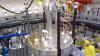 Seven Down, Three To Go: America's Microreactors Keep Going Critical
 Smart Dust
 Artificial Intelligence Could Transform Bank Runs From Hours-Long Crises...
 We Can't Put AI Back in the Box… So We Must Make It Serve Pro-Human Interests
 Dubai Just Finished the World's First Permanent Air Taxi Route: Airport to the Marina in Under 1


From Operation Ajax to Epic Fury: Why Washington Keeps Getting Iran Wrong
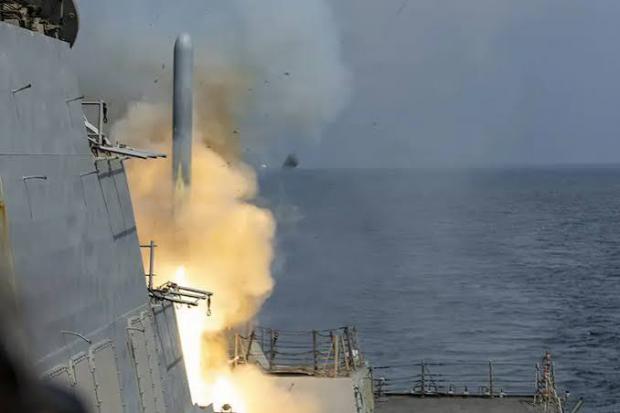
It is what empires in their death throes do. Fueled with a steady diet of McDonald's, Hollywood propaganda, and pure delusion, it must have seemed logical.
Now before we dig into this topic, let us take a step back to understand how we got here…
We can begin with the 1953 CIA coup in Iran, codenamed "Operation Ajax."
This was the CIA-led coup that overthrew Iran's democratically elected Prime Minister Mohammad Mossadegh in August 1953. It involved the CIA (led by Kermit Roosevelt Jr., Teddy Roosevelt's grandson), MI6 (British intelligence), Iranian military and royalist forces, and of course the Shah Mohammad Reza Pahlavi.
The result? Mossadegh was removed and the Shah's power consolidated. What followed was 25 years of brutal authoritarian rule, then the Islamic Revolution. But it was a brutal rule by a US puppet, so that kind of brutality was ok.
Now, why did the CIA and MI6 do this? Well, it was about oil. Specifically controlling it. What was installed was the following: the Anglo-Iranian Oil Company (AIOC), a British company controlling Iranian oil since 1901. It later became BP (British Petroleum).
It was an extremely one-sided deal with Iran where Britain got 85% of profits and Iran got 15%. On top of this the British refused to share financial records (it was almost certainly higher than 85%) and they treated Iranian workers poorly. Iran saw virtually nothing from its own oil.
This led to growing Iranian nationalism, which coincided with post-WWII independence movements globally. Iranians wanted control of their resources, and Mossadegh was elected on a platform of nationalisation and with popular demand to kick out the Brits.
Mohammad Mossadegh was the first democratically elected Prime Minister (1951). A Western-educated, secular nationalist, and not a communist (this matters). He was extremely popular with the Iranian public. Mossadegh nationalised Iranian oil (March 1951), kicked out the Anglo-Iranian Oil Company, and took control of oil production for Iran.
Britain's problem was that losing Iranian oil was an economic catastrophe. AIOC was Britain's largest overseas asset. Post-WWII Britain was already weakening and Iranian oil was crucial to the British economy. They couldn't afford to lose it.
So what did they do?
They implemented an economic blockade of Iran, with a naval blockade preventing oil exports. They froze Iranian assets and conducted coordinated international pressure on other countries not to buy Iranian oil. (You can see how history rhymes, with the US using the same methods.)