










Breaking News
 Inflation Is Rising, but What Can the Fed Actually Do?
 From Operation Ajax to Epic Fury: Why Washington Keeps Getting Iran Wrong
 U.S. Hawks Seek To Escalate Across Multiple Fronts
 Near Certainty Vera Rubin Found a Pluto Like Dwarf Planet
Top Tech News
 Meet the Frankenhamster: Scientists create bizarre 'planimal' by fusing together hamster and
 Roof-mounted solar panels turn your EV into its own charging station
 Russia 'is preparing to launch nuclear-armed space weapon by the end of this year'...
 Underground empire: China's plan to weaponize infrastructure gear
 $21,500 pickup plans to fix the American truck problem
 Seven Down, Three To Go: America's Microreactors Keep Going Critical
 Smart Dust
 Artificial Intelligence Could Transform Bank Runs From Hours-Long Crises...
 We Can't Put AI Back in the Box… So We Must Make It Serve Pro-Human Interests
 Dubai Just Finished the World's First Permanent Air Taxi Route: Airport to the Marina in Under 1



Inflation Is Rising, but What Can the Fed Actually Do?
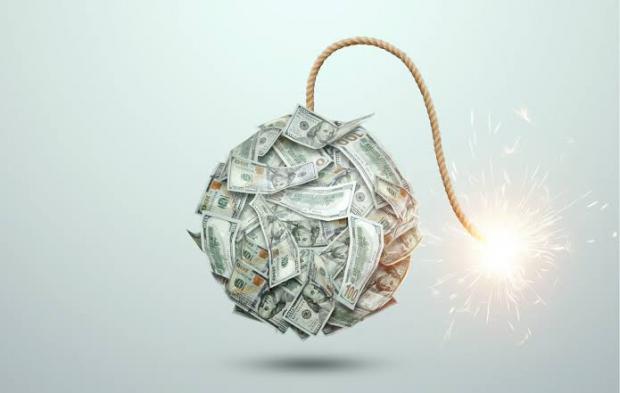
Core inflation, which excludes food and energy, accelerated to 3.3%, exceeding expectations and reaching its highest level in three years. Both measures increased 0.3% for the month. The market is now anticipating another 25-basis-point rate hike at the December 8-9 FOMC meeting, with the prospect of additional hikes in 2027. The entire theory that interest rates would be declining throughout 2026 has fallen apart precisely because economists underestimated the inflationary consequences of war, government spending, and the changing structure of the global economy.
Consumer expenditures increased by $63.8 billion at an annualized rate in October, yet actual consumption declined when adjusted for inflation. Real PCE fell by $5.8 billion. People are spending more money without necessarily consuming more. Expenditures on housing and utilities increased by $8.7 billion, healthcare by $7 billion, and financial services and insurance by $4.5 billion, while spending on motor vehicles and parts declined by $13.9 billion. There is a rather significant difference between spending more because you are prosperous and spending more because the cost of maintaining your existence has increased.
The personal savings rate stood at just 4.1%. Food prices increased another 0.4% in October. Remember, we are adding inflation on top of the enormous increase in prices that has already taken place since 2020. Nobody has restored the purchasing power that was destroyed during the pandemic. Even if the Fed were to achieve its sacred 2% target tomorrow, prices would continue rising from historically elevated levels. The public has been conditioned to believe that declining inflation means declining prices, and that is simply not true.
Meanwhile, third-quarter GDP growth was revised upward to an annualized 4.3%, with business investment surging 16.1%, helped by the enormous expenditures on artificial intelligence infrastructure. This presents an interesting dilemma. We have immense concentrations of capital flowing into technology and data centers while ordinary consumers struggle with insurance premiums, housing costs, and the price of groceries. The Federal Reserve is expected to manage these entirely different sectors of the economy with a single interest rate. How does raising the cost of a car loan deter a technology corporation sitting on billions in cash from constructing another data center? The policy will have a disproportionately greater impact on those who depend upon credit.
The fundamental flaw in the Keynesian model is that it assumes inflation can be managed primarily by manipulating domestic demand. The Federal Reserve cannot produce another barrel of oil. It cannot reopen a shipping route disrupted by war, manufacture fertilizer, or compel foreign governments to resume trade. Raising interest rates may suppress demand sufficiently to offset some of these inflationary pressures, but that comes at the expense of the private economy. The underlying supply problem remains.