










Breaking News
 Swap Lines: The Federal Reserve Extends Its Tightrope
 The Transgender Mirage Is Cracking
 The Collapse of the Saudi-American Alliance?
 BREAKING: EPA eliminates rule that limits 'greenhouse gas' emissions from power plants
Top Tech News
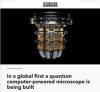 Quantum computing may soon become part of the microscope itself.
 Volkswagen Just Unveiled The Most Efficient EV Ever Tested
 NASA Super Light Solar Sail Project Will Be 12-40 Times Lighter and Faster
 Space Telescope Interferometer to Image Exoplanet Continents
 Twenty-five years of "temporary": how 9/11 built a surveillance state Americans never vote
 I'll Never Buy Another WALMART Battery!
 Shoei GT-Air 3 Smart helmet drops with built-in AR for $1,500
 AI Whistleblower Tells Tucker How AI Could Kill All Humans by 2040
 You Hate Flock? Well There's More...
 Will Spiking Diesel Prices Drive Autonomous Trucking?



WTF Happened with FTX (Part 1 of 3)
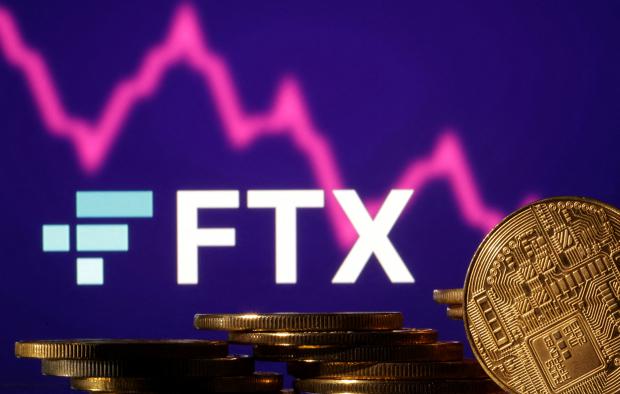
Ten days later the third largest Crypto exchange in the world was bankrupt and its founder was under international investigation for fraud.
In this article I'll go through how Crypto giant FTX fell apart. There is a lot of backstory to this situation which I'll cover in a following article, discussing the beginnings of Alameda research and the story of how a sketchy hedge fund turned into a major exchange.
As you've no doubt heard repeatedly this week, self custody of your Crypto is the safest approach until we know who is insolvent and the extent of the contagion. If you're not confident with self custody, Coinbase and Kraken seem to be the safest Crypto exchanges, but that is still a counterparty risk that I'm not willing to take personally in these market conditions.
The Balance Sheet Leak
The exclusive scoop from Coindesk looked bad for Alameda Research. The firm, which performed market making on FTX as well as taking directional bets and venture capital investments, seemed insolvent on a realized value basis.
Their balance showed $14.6 billion in assets held against $8 billion in liabilities. On paper solvent on a mark-to-market basis, but digging in there was no way that mark was reasonable.