










Breaking News
 Wash Post Editorial Board Turns Against Climate Agenda?!
 One Year Ago I Predicted and Described in Detail Huge Mars AI Plans that Elon Musk Confirmed...
 British Teachers To "Spot Misogyny" In Boys And Target Them For Reeducation
 Democrats Refuse To Release Post-Mortem Of 2024 Election Loss, DNC Chair Says
Top Tech News
 This tiny dev board is packed with features for ambitious makers
 Scientists Discover Gel to Regrow Tooth Enamel
 Vitamin C and Dandelion Root Killing Cancer Cells -- as Former CDC Director Calls for COVID-19...
 Galactic Brain: US firm plans space-based data centers, power grid to challenge China
 A microbial cleanup for glyphosate just earned a patent. Here's why that matters
 Japan Breaks Internet Speed Record with 5 Million Times Faster Data Transfer
 Advanced Propulsion Resources Part 1 of 2
 PulsarFusion a forward-thinking UK aerospace company, is pushing the boundaries of space travel...
 Dinky little laser box throws big-screen entertainment from inches away
 'World's first' sodium-ion flashlight shines bright even at -40 ºF



One Year Ago I Predicted and Described in Detail Huge Mars AI Plans that Elon Musk Confirmed...
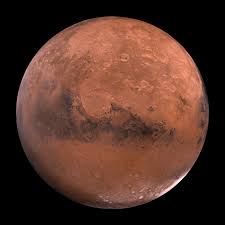
One year ago, I predicted in Videos and articles that Elon Musk would build AI data centers on Mars. A few days ago, Elon Musk confirmed the general plan for AI data centers on Mars to an All hands meeting of XAI.
I also wrote one third of the book AI Rising. The book is available on Amazon and is a best seller in the AI category.
I wrote a chapter on AI data centers on Mars to enable about 3 trillion AI chips.
The book goes over the important future aspects of AI in detail. The chapter that some might have considered to be the craziest is now confirmed as part of the Elon Musk plan.
Mars has a ~24.6-hour day, so solar power isn't constant without storage. Assuming sufficient energy storage (e.g., batteries), the average power over time matches the intercepted power from the sunlit side, keeping our calculation valid.
Dust Storms: These can reduce solar flux, but for a theoretical maximum, we use the average flux of 586 W/m².
Orbital Variation: Mars' solar flux varies from 492 W/m² to 717 W/m² due to its elliptical orbit, but 586 W/m² is a reasonable average.
Transmission Losses: A planet-wide grid would incur losses, but we assume the harnessed power is delivered efficiently, with overhead included in the PUE (Power Utiliziation Efficiency).
With 20% efficient solar panels covering the sunlit side of Mars, Elon Musk, XAI, SpaceX and Tesla can harness 4,240 terawatts of power. Accounting for a PUE of 1.2, this supports approximately 3.53 × 10¹² (3.53 trillion) 1000-watt GPUs.