










Breaking News
 Rising Male Infertility A Catastrophe Waiting to Happen
 EU is Broke & Rejects Peace Since They Would Have to Return Russian Money
 The Gathering Storm
 The Illusion of Democracy: The "Iron Law of Oligarchy"
Top Tech News
 Perfect Aircrete, Kitchen Ingredients.
 Futuristic pixel-raising display lets you feel what's onscreen
 Cutting-Edge Facility Generates Pure Water and Hydrogen Fuel from Seawater for Mere Pennies
 This tiny dev board is packed with features for ambitious makers
 Scientists Discover Gel to Regrow Tooth Enamel
 Vitamin C and Dandelion Root Killing Cancer Cells -- as Former CDC Director Calls for COVID-19...
 Galactic Brain: US firm plans space-based data centers, power grid to challenge China
 A microbial cleanup for glyphosate just earned a patent. Here's why that matters
 Japan Breaks Internet Speed Record with 5 Million Times Faster Data Transfer
 Advanced Propulsion Resources Part 1 of 2


The Illusion of Democracy: The "Iron Law of Oligarchy"

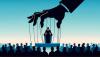
In 1911, the German-Italian sociologist Robert Michels (1876–1936) published his book Zur Soziologie des Parteiwesens in der modernen Demokratie: Untersuchungen über die oligarchischen Tendenzen des Gruppenlebens (Political Parties: A Sociological Study of the Oligarchical Tendencies of Modern Democracy). In it, he formulates the "iron law of the oligarchy." In democracies, according to Michels, there is a tendency toward oligarchy: the rule of the few over the many.1 Sooner or later, a small group, the cunning, power-hungry party elites, will rule. There emerges a reign of the elected over the voters. It is therefore an illusion to believe that democracy gives voters self-determination over their destinies. Michels suggests three reasons that explain the shift of power from the voters, from the party base, to the elected.
First, self-government of the masses is not possible, not even technically. Democracy needs parties. Parties are organizations, and like any organization, a party needs firm leadership. This puts people in positions who have the necessary aptitude (expertise, leadership, assertiveness, etc.). A professional leadership emerges. Second, the mass of voters is ignorant and not the sovereign masters of their own destinies. The majority of people are not in a position to form their political will in a rational manner. They're looking for political leadership. Third, the members of the party elites have the personal, intellectual, and also charismatic superiority to win over the masses and the party delegates and to create a following for themselves.
Once the relatively small group of party elites has reached the power centers—once a party oligarchy has developed—it begins, according to Michels, to isolate and shield itself from competitors. Because of their intellectual superiority, their will to assert themselves and their access to financial resources, the members of the elite can secure their fame as public elected representatives, make their actions appear to be directed toward the welfare of society, make themselves personally inviolable, and silence political counter currents.2 The party oligarchs use their incontestable position of power for their own purposes. They begin to pursue goals that are no longer consistent with the party base or the will of the voters.
Can Michel's theses be transferred to the present? Does it offer a suitable pattern of interpretation for today's sociopolitical events? One might first think that the "oligarchization of democracy" is kept in check if there is effective competition between parties for government power. As long as voters can give their votes to competing parties, oligarchization within the individual party may occur, but not oligarchization of government power per se. But this hope proves to be deceptive.
All parties are wooing for votes. And the voters give their vote to the parties whose programs and policies they hope will improve their personal position. The parties therefore have an incentive not only to attend upon voters' dreams of redistribution but also to encourage them. In the competition for government power, those who want to be elected to power outbid each other in winning as many voters as possible with "election gifts." It is precisely this buying of votes, which takes place in democracy, that supports Michels's thesis.