










Breaking News
 Our Founders Hated Democracy - A Tool of The Socialists
 America's Birthday Does Not Need Fixing
 Who Owns the Seed?
 Trump's Social Media Advisor Reveals All: Epstein, Iran, and Mark Levin's Israeli Propagand
Top Tech News
 'Groundbreaking' Potential Lupus Cure Sends Patients into Remission, Allowing Dreams...
 Speculations on What Could Show Physics Beyond the Standard Model
 SpaceX Orbital Travel and Orbital Hotels Need Starfall – Getting Back Safe and Cheap is Exciting
 Lizard-inspired wiggly wheels let Mars rover swim through sand
 Fact Sheet: President Donald J. Trump Ushers in the Next Frontier of Quantum Innovation
 Researchers at Johns Hopkins University just let an AI-guided robot remove a dead pig's gallblad
 World's first consumer wing-in-ground effect aircraft takes flight
 America's Military Readiness Depends On Deployable Nuclear Power
 License Plate Cameras Are About To Start Tracking A Lot More Than Just Your Car
 Heads up: Apparently the government is hiding cameras inside fake utility boxes



The Lyrid meteor shower is visible now and peaking soon. Here's how to spot it
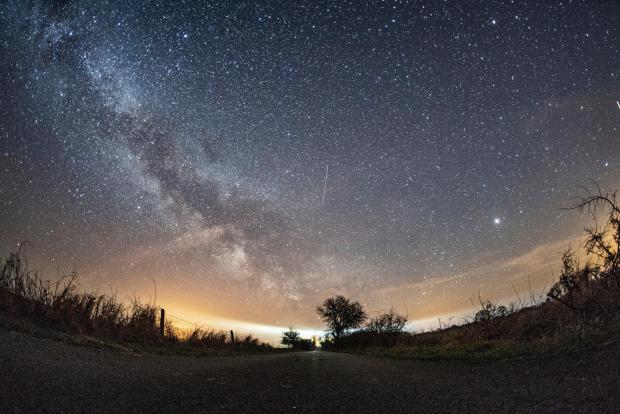
NEW YORK (AP) — This year's Lyrid meteor shower is getting a boost thanks to a dim crescent moon. Skywatchers could see 10 to 20 shooting stars per hour soar across the spring sky, according to NASA, when the fiery display peaks Tuesday night into Wednesday morning.
The show will be visible across the globe, but views will be best in the Northern Hemisphere. And there's no risk of the crescent moon photobombing the Lyrid shower. It'll set before the fun starts.
Meteor showers happen when the Earth plows through debris trails left behind by space rocks. Those stray bits get hot as they enter the atmosphere, producing fiery streaks that are also known as shooting stars.
Contrary to the name, most meteor showers are actually debris from comets. The Lyrids are the leftovers from an icy ball called comet Thatcher.