










Breaking News
 Our Founders Hated Democracy - A Tool of The Socialists
 America's Birthday Does Not Need Fixing
 Who Owns the Seed?
 Trump's Social Media Advisor Reveals All: Epstein, Iran, and Mark Levin's Israeli Propagand
Top Tech News
 'Groundbreaking' Potential Lupus Cure Sends Patients into Remission, Allowing Dreams...
 Speculations on What Could Show Physics Beyond the Standard Model
 SpaceX Orbital Travel and Orbital Hotels Need Starfall – Getting Back Safe and Cheap is Exciting
 Lizard-inspired wiggly wheels let Mars rover swim through sand
 Fact Sheet: President Donald J. Trump Ushers in the Next Frontier of Quantum Innovation
 Researchers at Johns Hopkins University just let an AI-guided robot remove a dead pig's gallblad
 World's first consumer wing-in-ground effect aircraft takes flight
 America's Military Readiness Depends On Deployable Nuclear Power
 License Plate Cameras Are About To Start Tracking A Lot More Than Just Your Car
 Heads up: Apparently the government is hiding cameras inside fake utility boxes



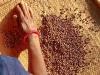
Who Owns the Seed?
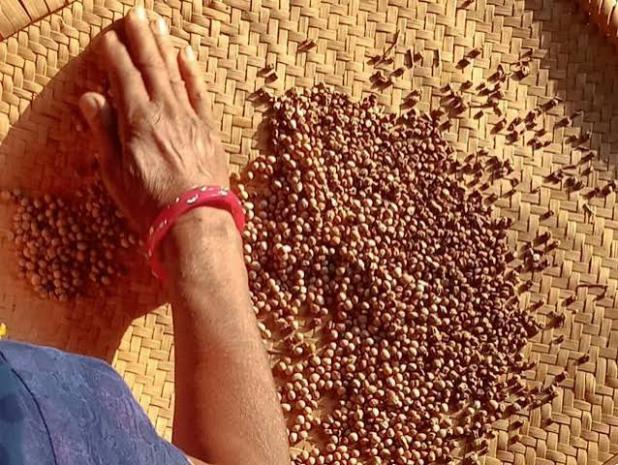
The European Union is advancing a sweeping rewrite of its seed laws under the banner of Plant Reproductive Material regulation (PRM). We are told this is about modernization, safety, and disease control. That sounds reasonable until you look at what the policy actually does and who it benefits.
What it does is shift control. What it benefits is scale. And what it tells us, if we are paying attention, is a great deal about how power now flows in the Western world.
The Heart of the Matter: Subsidiarity
There is a principle older than the European Union, older than the American republic, older even than the modern nation-state. It holds that decisions should be made as close to the individual as possible. Catholics call it subsidiarity. Americans express a similar instinct through federalism and a preference for local control, or just common sense. It rests on a simple observation. The people closest to a problem usually understand it best, live with its consequences most directly, and have the strongest reason to get it right.
Agriculture is the perfect example. A farmer in Provence knows his soil, his climate, his pests, and his market in ways no official in Brussels ever will. A gardener in Bavaria who has spent twenty years selecting a tomato variety for her specific plot knows things that cannot be captured in any database. A smallholder in Sicily adapting a wheat cultivar to drought conditions is doing real work, and doing it better than any centralized authority could direct.
For ten thousand years, people have saved, selected, traded, and improved seeds through networks of farmers, gardeners and local breeders. This is not a quaint hobby. It is the foundation of agricultural civilization. Nearly every crop we depend on came from this quiet, decentralized work. The diversity in our fields and on our plates exists because millions of ordinary people, without asking permission from anyone, did the patient work of selection and exchange.
The Plant Reproductive Material regulation turns this ancient order on its head. It presumes that seeds must be authorized from above before they can circulate below. It treats the default activity of human agriculture, the saving and sharing of seed, as something requiring a permission slip from a bureaucrat. This is not a minor tweak. It is a philosophical reversal. It moves the presumption of legitimacy from the grower to the regulator.
Conservatives understand why this matters. Power concentrated at a distance is power removed from accountability. A village that governs its own seed exchange answers to itself. A continent that governs seed exchange from Brussels answers to no one the farmer will ever meet. The regulation does not just impose costs, though it does that, and severely. It transfers authority. It takes what was local and makes it central. It takes what was free and makes it licensed. That transfer is the whole point, even when nobody says so out loud.