










Breaking News
 Our Founders Hated Democracy - A Tool of The Socialists
 America's Birthday Does Not Need Fixing
 Who Owns the Seed?
 Trump's Social Media Advisor Reveals All: Epstein, Iran, and Mark Levin's Israeli Propagand
Top Tech News
 'Groundbreaking' Potential Lupus Cure Sends Patients into Remission, Allowing Dreams...
 Speculations on What Could Show Physics Beyond the Standard Model
 SpaceX Orbital Travel and Orbital Hotels Need Starfall – Getting Back Safe and Cheap is Exciting
 Lizard-inspired wiggly wheels let Mars rover swim through sand
 Fact Sheet: President Donald J. Trump Ushers in the Next Frontier of Quantum Innovation
 Researchers at Johns Hopkins University just let an AI-guided robot remove a dead pig's gallblad
 World's first consumer wing-in-ground effect aircraft takes flight
 America's Military Readiness Depends On Deployable Nuclear Power
 License Plate Cameras Are About To Start Tracking A Lot More Than Just Your Car
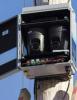 Heads up: Apparently the government is hiding cameras inside fake utility boxes



BYD's New Blade Battery Is Brilliant, But Good Luck Taking It Apart
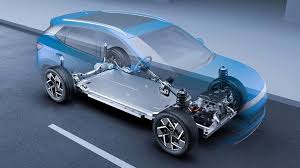
One of the largest selling points of an EV is the total cost of ownership. Sure, an EV may have a heavy upfront cost and sharp depreciation, but fewer moving parts generally mean less maintenance. That said, serviceability is still a major concern, especially when something as expensive as the battery pack is the point of focus.
Recently, a team of researchers tore down one of BYD's cutting-edge Blade batteries. What they found is that 1,261-pound pack took a significant amount of time and effort to disassemble—that meant grinding, cutting, hammering, and even freezing the pack in order to tear it down to a serviceable state.
The new Blade battery itself is a genuinely clever design. BYD uses long, narrow cells as structural elements with tight packing. This allows the automaker to achieve greater efficiency and pack density, which is a challenge in itself, let alone in a pack capable of megawatt charging speeds. The compact packaging solution is super useful on the surface, but like all complicated engineering projects, eventually someone has to decide where the trade-offs are. For this pack, it appears that might be serviceability.
BYD, like many automakers, treat its battery packs like giant integrated systems. Cells—all 170 of them inside of the Blade pack—become modules, modules become structural components, and structural components become part oft he vehicle itself. Other manufacturers are pursuing similar ideas today for good reasons (weight savings, rigidity, reducing manufacturing complexity), all of which help to squeeze every last mile out of an EV.
The trade-off is when something goes wrong.
One of the big hurdles during the 8-hour deconstruction was the amount of structural adhesive used to assemble the pack. These adhesives (as the name might suggest) are used to secure components together. They create super strong bonds within the pack that help the contents withstand various environmental conditions, as well as adds to a pack's overall crashworthiness. It's also a way to bond the pack together in lieu of fasteners or other weight-adding components. The flip-side is that adhesives can also make the pack difficult to service, which was a rather big point that Sandy Munro made a few years ago when Tesla filled its structural packs with pink foam.
In BYD's case, the tear down reportedly found these structural adhesives bonded around battery modules, busbars, tabs, and even wiring. The team even froze the pack in cold storage for 40 hours in an attempt to make it more brittle for disassembly, but that wasn't enough to make it easy.
Imagine trying to repair a battery pack like this after a crash, or attempting to revive a single dead cell in a pack as an independent repair shop. You can quickly see how the complexity can equate expensive labor that makes repairing a pack very costly, or how insurance rates can skyrocket if a battery can only be replaced. (Although when most existing EVs get crashed, the entire pack gets replaced, with refurbishment happening off-site before the pack is potentially resold.)