










Breaking News
 Delcy's 'Gatekeeper': Sources Say Ex-Trump Official Claver-Carone Holds Keys to Caracas
 Elon and SpaceX Have Made AI Training 10 Times Faster
 SR-71 successor? Quarterhorse Mk 2.1 prototype cracks the sound barrier
 EU Wants Crisis Powers To Seize Control Of Chip Supplies, Seeks Restrictions On Chinese Imports
Top Tech News
 Cars Are Fast Becoming Dystopian Prison Pods...
 Our Emergency Water Plan Wasn't Good Enough - So We Built This
 Sodium Ion Batteries Can Reach 100 Gigawatt Per Hour Per Year Scale in 2027
 Juiced Bikes proves capable electric motorcycles don't have to cost a lot
 Headlight projectors turn your car into a drive-in theater
 US To Develop Small Modular Nuclear Reactors For Commercial Shipping
 New York Mandates Kill Switch and Surveillance Software in Your 3D Printer ...
 Cameco Sees As Many As 20 AP1000 Nuclear Reactors On The Horizon
 His grandparents had heart disease.
At 11, Laurent Simons decided he wanted to fight aging.
His grandparents had heart disease.
At 11, Laurent Simons decided he wanted to fight aging.
 Mayo Clinic's AI Can Detect Pancreatic Cancer up to 3 Years Before Diagnosis–When Treatment...



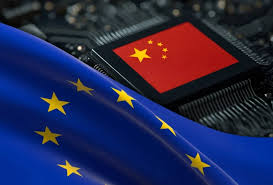
EU Wants Crisis Powers To Seize Control Of Chip Supplies, Seeks Restrictions On Chinese Imports
So much for the sanctity of those "contract-backed" backlogs...
The draft law also enables common purchasing to boost the bloc's negotiating power, and would mark a clear expansion of the EU's powers to intervene directly in industrial supply chains.
Amid tensions between Beijing and Washington, there are growing fears in Europe that semiconductors can become a tool of economic coercion, heightened by European reliance on Taiwan for high-performance chips.
The clearest example of Europe's heavy hand was laid bare last year when the Dutch government took control of chipmaker Nexperia from its Chinese owner over concerns that it was moving production and assets out of Europe. The flow of chips from Nexperia's China arm slowed dramatically, forcing some European car companies to reduce production.
The draft law, which is still subject to change ahead of its expected publication next week, would allow the European Commission far-reaching powers in the event of semiconductor shortages that threaten supplies of weapons, medical devices, digital infrastructure and other key categories of goods. In such a crisis, the Commission could impose fines of up to €300,000 on companies that fail to provide requested information on their supply-chain capacity. It could also "force semiconductor manufacturers to prioritize orders for crisis-critical products, overriding existing contracts", the draft reads.
Brussels could also enable common purchasing to "strengthen negotiating power and prevent competition between EU countries for limited supplies". The Commission would then act as a central buyer for multiple EU countries, as it did to acquire vaccines during the pandemic.
According to the FT, the so-called Chips Act forms part of a wider push from the bloc to reduce its dependence on US technology by backing European alternatives in sectors from semiconductors and cloud computing to AI. In the document, Brussels acknowledges that the bloc is "almost entirely dependent on the US and Asia" for the most advanced chips.