










Breaking News
 Delcy's 'Gatekeeper': Sources Say Ex-Trump Official Claver-Carone Holds Keys to Caracas
 Elon and SpaceX Have Made AI Training 10 Times Faster
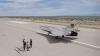 SR-71 successor? Quarterhorse Mk 2.1 prototype cracks the sound barrier
 EU Wants Crisis Powers To Seize Control Of Chip Supplies, Seeks Restrictions On Chinese Imports
Top Tech News
 Cars Are Fast Becoming Dystopian Prison Pods...
 Our Emergency Water Plan Wasn't Good Enough - So We Built This
 Sodium Ion Batteries Can Reach 100 Gigawatt Per Hour Per Year Scale in 2027
 Juiced Bikes proves capable electric motorcycles don't have to cost a lot
 Headlight projectors turn your car into a drive-in theater
 US To Develop Small Modular Nuclear Reactors For Commercial Shipping
 New York Mandates Kill Switch and Surveillance Software in Your 3D Printer ...
 Cameco Sees As Many As 20 AP1000 Nuclear Reactors On The Horizon
 His grandparents had heart disease.
At 11, Laurent Simons decided he wanted to fight aging.
His grandparents had heart disease.
At 11, Laurent Simons decided he wanted to fight aging.
 Mayo Clinic's AI Can Detect Pancreatic Cancer up to 3 Years Before Diagnosis–When Treatment...



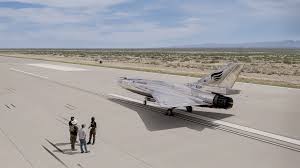
SR-71 successor? Quarterhorse Mk 2.1 prototype cracks the sound barrier
To this day, the Lockheed SR-71 Blackbird holds a number of air records, including the official world airspeed record for a crewed, air-breathing jet aircraft when it reached Mach 3.32 in 1976; the absolute altitude record for sustained horizontal flight; and speed over a closed 1,000-km (621-mile) course. Added to this, it also set time-and-distance records for flights between New York and London; London and Los Angeles; Los Angeles and Washington, DC; Kansas City and Washington, DC; and St. Louis and Cincinnati.
Not only could the high-altitude spy plane set such records, it could cruise at high supersonic speeds as a matter of routine while gathering intelligence for the US and NATO, all while reportedly outrunning more than 4,000 anti-aircraft missiles during its operational career.
The Blackbirds were retired to museums three decades ago, but their legacy lives on as both an example and a challenge to modern aerospace engineers. Though it's uncrewed, Hermeus sees its Quarterhorse project as both the spiritual and technological successor to the SR-71.
The goal of the project is not only to build an aircraft capable of surpassing the Blackbird's records, but also to act as a testbed for critical technologies needed for routine, sustained hypersonic flight. These include the company's Chimera turbine-based combined-cycle (TBCC) propulsion system, which integrates a conventional turbojet engine with a ramjet to enable transitions from subsonic to hypersonic speeds.
Hermeus's approach isn't to build a single airframe. Instead, its engineers have opted for rapid prototyping by building a series of aircraft, each designed to handle a specific phase of development – from taxi tests to takeoff and landing, and now supersonic flight – before eventually taking on the legacy of the SR-71.
The latest flight of the F-16 Fighting Falcon-sized Mk 2.1 took place 364 days after the maiden flight of the Quarthorse Mk 1, reaching a top speed of Mach 1.21. According to the company, data collected from the current tests will be used to develop the Mk 2.2 and Mk 2.3, moving toward sustained high-supersonic flight with the uncrewed Darkhorse multi-mission military aircraft and, ultimately, the Halcyon, a 20-passenger commercial hypersonic transport jet.
"Our customers at the Department of War are paying close attention to how fast this program is moving," said AJ Piplica, CEO and Co-founder of Hermeus. "This flight demonstrates a pace of execution that is extremely rare in modern aviation. Our country's ability to deliver new asymmetric military capability at scale depends on teams that can solve hard technical challenges quickly. That's exactly what we're proving with each test flight we conduct and each new aircraft we build at Hermeus."