










Breaking News
 Does Google Want To Create a Two-Tier Internet Only Accessible To Those With 'Approved' Devi
 Argentina Moves To Legalize "Non-Human Corporations" Run By AI
 I Built the Laziest Potato System on YouTube | 450lbs Every Year Without the Work!
 Why Amish Gardens Never Have Ticks -- The One "Oil" Method Corporations Hate
Top Tech News
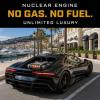 NUCLEAR ENGINE - UNLIMITED LUXURY - 20 YEARS WITHOUT REFUELING
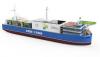 China Unveils Nuclear-Powered Floating Hub For Green Shipping
 China Launches World's 1st Commercial Brain Chip, Beating Elon Musk's Neuralink!
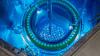 Modular next-gen US nuclear reactor goes critical
 How EMF's cause disease
 This Company Will Add Phone, AirPod, and Smartwatch Trackers to License Plate Readers
 Elon Details SpaceX AI Data Center in Space Details and Roadmap
 5-in-1 miniature surgical robot is the size of a seed
 Every hard drive you own will die.
 Flying car industry turns to solid-state batteries for commercial takeoff



US Begins Another Round of Attacks on Iran
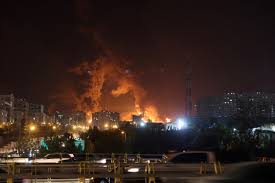
On Wednesday night, US Central Command (CENTCOM) announced it was launching a round of attacks on Iran for the second night in a row as Iranian media began reporting blasts across the southern part of the country.
In response to the US attacks, Iran's military said that it would fully close the Strait of Hormuz. "From this moment, due to insecurity in the region, the Strait of Hormuz is declared closed to the passage of all vessels, including oil tankers and commercial ships, and any traffic will be targeted," Iran's Khatam al-Anbiya Central Headquarters said in a statement.
CENTCOM then claimed that the Iranian statement was false and that ships were still transiting the strait, but the denial came just a short while after Iran's announcement. President Trump had earlier claimed that over the past month, the US military was conducting a "secret mission" to allow tankers to exit the Strait of Hormuz. He claimed the US helped bring 100 million barrels out of the strait, which, if true, is still a fraction of the oil that was transiting through the waterway before he launched the war.
After the start of the US strikes, Iranian media reported blasts across Iran's southern Hormozgan province and said that at least two residents of the city of Kargan were wounded by shrapnel. Iran appears to be striking back as air raid sirens were sounded in Bahrain and the IRGC said it was targeting 18 US military installations across the region.
The fresh US attacks came after President Trump threatened more bombings, and US War Secretary Pete Hegseth also said that the US would be attacking the Islamic Republic.
"CENTCOM will be busy tonight because President Trump said we will be hitting Iran hard, and we will be," Hegseth told reporters outside CENTCOM headquarters in Florida not long before the strikes started.
On Wednesday morning, the president said on Truth Social that Iran has "taken too long to negotiate a deal that would have been great for them, now they will have to pay the price." He also claimed in the post that Iran had been "completely defeated" despite its ability to launch missile and drone attacks across the Middle East.
In comments to reporters in the Oval Office later in the day, Trump was more explicit in his threat. "We hit them hard yesterday, and we're going to hit them again hard today," he said.
Trump also told Fox News reporter Trey Yingst that he may "keep going" with his attacks on Iran and that he is "getting closer to the targeting of Iranian power plants and bridges."
During the US-Israeli bombing campaign against Iran, Trump repeatedly threatened to launch massive attacks on Iranian energy infrastructure and bridges, part of his threats to turn the country into "hell" and end a "whole civilization."