










Breaking News
 Does Google Want To Create a Two-Tier Internet Only Accessible To Those With 'Approved' Devi
 Argentina Moves To Legalize "Non-Human Corporations" Run By AI
 I Built the Laziest Potato System on YouTube | 450lbs Every Year Without the Work!
 Why Amish Gardens Never Have Ticks -- The One "Oil" Method Corporations Hate
Top Tech News
 NUCLEAR ENGINE - UNLIMITED LUXURY - 20 YEARS WITHOUT REFUELING
 China Unveils Nuclear-Powered Floating Hub For Green Shipping
 China Launches World's 1st Commercial Brain Chip, Beating Elon Musk's Neuralink!
 Modular next-gen US nuclear reactor goes critical
 How EMF's cause disease
 This Company Will Add Phone, AirPod, and Smartwatch Trackers to License Plate Readers
 Elon Details SpaceX AI Data Center in Space Details and Roadmap
 5-in-1 miniature surgical robot is the size of a seed
 Every hard drive you own will die.
 Flying car industry turns to solid-state batteries for commercial takeoff



Does Google Want To Create a Two-Tier Internet Only Accessible To Those With 'Approved' Devi
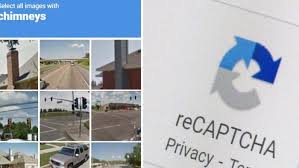
For what else are we to conclude given that Google appears to be working on a system to lock large parts of the internet behind a new form of CAPTCHA (Completely Automated Public Turing test to tell Computers and Humans Apart) designed not to tell apart humans from bots, but instead to make an un-person of anyone who doesn't own an 'approved' Android or Apple device.
Google's reCAPTCHA service is used by a wide variety of websites, many of them independent of Google in every other regard, to limit incoming traffic or data entered into contact forms. It is intended to prevent automated software from accessing these resources and using them to send spam messages or flood websites with denial of service attacks. You have probably encountered it when told to identify all the bicycles in a grid of images.
Under the auspices of its Cloud Fraud Defence programme, Google is introducing a new form of CAPTCHA for which the way to 'prove' one is a human is to be in possession of a Google-approved device. Reclaim the Net's original reporting focused on the threat to deGoogled phones, meaning phones running Android-like operating systems which have Google's – often unwelcome – proprietary features removed, such as GrapheneOS or LineageOS. However, just as the dull name of 'age verification' serves as a cloak beneath which schemes to end all truly personal computing can be smuggled, the danger here could be much broader than the technically focused headline implies. As the sources discussing this are relatively few, it is hard to ascertain exactly what has already been rolled out and what is still in the conceptual stages. But it appears that the new style of CAPTCHA threatens not just users with deGoogled phones but anyone without an 'approved' device. Google's own documentation confirms the existence – as a "Preview" in limited use with alternative options presently existing – of CAPTCHAs which require an Apple or Android handset to pass them. But it describes this in a "Mobile Verification" context, which may imply a more limited use than reCAPTCHA in general.
However, with such functionality possible, there is no reason that Google could not activate this, without alternative options, everywhere that its reCAPTCHA-branded prompts appear.
Knowing that locking out everyone except Android users would have even the most clueless politicians smelling a monopoly, Google has deigned to also allow Apple iOS users through, but their approval is nonetheless limited to devices where the full tech stack is under corporate control. Apple phones and tablets use a locked bootloader to trap users within a walled garden, where they are at Apple's mercy whenever an unwelcome new feature is introduced. Unless the Keep Android Open campaign succeeds, certified Android devices will soon be scarcely better, a condition of certification being that manufacturers must obstruct users from side-loading to install apps from outside Google's Play Store.
Because Apple and Android phones do not respect your freedom, Google chooses to trust them. That's an odd-sounding sentence, so let me explain.