










Breaking News
 Data Needs Theory to Make Sense
 Pesticides, Cancer and the Supreme Court: 5 Things You Need to Know
 A Good Reason to Leave Your Phone at Home
 Is The War Over (Again)?
Top Tech News
 NUCLEAR ENGINE - UNLIMITED LUXURY - 20 YEARS WITHOUT REFUELING
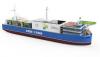 China Unveils Nuclear-Powered Floating Hub For Green Shipping
 China Launches World's 1st Commercial Brain Chip, Beating Elon Musk's Neuralink!
 Modular next-gen US nuclear reactor goes critical
 How EMF's cause disease
 This Company Will Add Phone, AirPod, and Smartwatch Trackers to License Plate Readers
 Elon Details SpaceX AI Data Center in Space Details and Roadmap
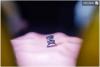 5-in-1 miniature surgical robot is the size of a seed
 Every hard drive you own will die.
 Flying car industry turns to solid-state batteries for commercial takeoff



Should an Industry-Friendly Rider in the Farm Bill Override Over 1,000 State Laws?
It attempts to remove the right of Americans to maintain local control over our food and farms.
It could also nullify over 1,000 state laws that are already on the books.
The Farm Bill, also known as the Farm, Food, and National Security Act of 2026, which includes the Save Our Bacon Act as Section 12006, was passed by the House on April 30, 2026 and now heads to the Senate, where the Agriculture Committee is expected to draft its own version of the bill.
Embedded in the legislation is the so-called "Save our Bacon" (SOB) Act, which would strip state and local governments of their ability to make agricultural policies for meat consumed in the state—preventing state and local governments from establishing food production and distribution safeguards.
As often happens, the language is designed to confuse. No doubt written by industry wordsmiths, the language sounds very reasonable, as long as you don't know what it really means. Let me explain the bill language by quoting the first four sections and then decoding them:
(1) [The purpose of this bill is to] protect the free movement in interstate
commerce of products derived from covered livestock;
(2) encourage a national market of such products;
(3) ensure that producers of covered livestock
are not subject to a patchwork of State laws restricting access to a national market; and
(4) ensure that the United States continues to uphold its international trade obligations.
(1) "free movement" in fact means that states will not be able to restrict the entry and sale of meat produced under conditions that states deem improper.
(2) "national market" means no state will be allowed to refuse the entry and sale of meat, despite existing state laws that would prohibit sales of meat from certain locations, or meat produced under inhumane conditions.
(3) "patchwork of State laws" means that this single federal law will supersede and nullify all state laws, ignoring constitutional limits on federal power, to impose this single law on the whole country.
(4) "uphold its international trade obligations" means the states cannot restrict the sale of meat from any country, even when that country is inflicted with a pest like the New World screwworm.