










Breaking News
 The Best and Worst Case Scenario for 'Disclosure Day' After $94 Million Box Office Opening
 BREAKING UPDATE: 8 Crew Members Dead After Air Force B-52 Bomber Crashes...
 Shawn Ryan Tests a Real Humanoid Robot
 Scientists Develop Injection That Regrows Knee Cartilage Naturally
Top Tech News
 Heads up: Apparently the government is hiding cameras inside fake utility boxes
 Sodium Batteries And EVs That Power The Grid: Inside GM's Big Energy Push
 NUCLEAR ENGINE - UNLIMITED LUXURY - 20 YEARS WITHOUT REFUELING
 China Unveils Nuclear-Powered Floating Hub For Green Shipping
 China Launches World's 1st Commercial Brain Chip, Beating Elon Musk's Neuralink!
 Modular next-gen US nuclear reactor goes critical
 How EMF's cause disease
 This Company Will Add Phone, AirPod, and Smartwatch Trackers to License Plate Readers
 Elon Details SpaceX AI Data Center in Space Details and Roadmap
 5-in-1 miniature surgical robot is the size of a seed


So, What Do We Know?
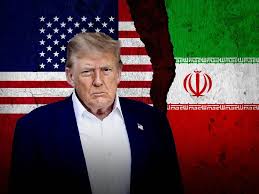
Markets are jubilant after an agreement was confirmed by US, Iranian and Pakistani sources, but not without first being threatened by Israeli strikes on Hezbollah in Lebanon which prompted a telling-off by Donald Trump on Truth Social where he told everyone "don't blow it".
Brent crude is down more than 4% this morning to be dealing around $83.72 at time of writing and a rally in bonds late last week has carried over to this morning with Aussie and Kiwi sovereign curves both seeing notable bull steepening.
US equity futures portend the printing of a healthy green candle when markets open later today, but there's still a lingering sense that we're not out of the woods yet. Aside from the Israeli strikes on Hezbollah over the weekend, and the lesson of experience that the IRGC doesn't need much convincing to return to fighting, we learned this morning that despite Donald Trump's declaration that the strait is now open the strait will actually remain closed until the official signing occurs on Friday – ostensibly to provide time for mine clearing operations. Needless to say, a week is a long time in Middle East geopolitics.
Nevertheless, markets are rallying on the vibe right now but what is actually in the deal will be the critical points – and there is still plenty of fog of war surrounding terms. So, what do we know?
Firstly, the agreement is not really a 'deal' at all, or even a deal to have a deal, but rather a memorandum of understanding staking out a framework to discuss a deal over the next 60 days.
War is supposed to cease on all fronts – including Lebanon, Hormuz is supposed to open and the US blockade lifted within 30 days in a kind of oil-for-oil exchange that we have flagged here many times. Iranian sources are claiming that Hormuz transits will occur under Iranian auspices, whereas the US side is still saying no tolls. Axios reports comments from US sources that sanctions relief will follow the re-opening of Hormuz, but there seems to be disagreement over the release of frozen funds and Iranian sources are claiming reparations of some form up to $300bn in value would be payable. If true, that really would be the full enchilada of TACOs and would see the US agreeing to a set of terms that had it restart bombing only a few weeks ago. On the other hand, it could be the case that the terms are actually much more favorable to the US and that the Iranians are simply trying to save face.
Crucially, there appear to be no guarantees on the nuclear issues aside from a promise from Iran not to seek a nuclear weapon and to engage in talks over the next 60 days. Given that the nuclear program was the entire casus belli in the first place, we still see plenty of scope for this to all fall in a heap. The US midterm elections are 81 days after the expiry of the 60 day negotiating period. Could we see a few more can-kick extensions over that time? Announcing the conclusion of the deal, Donald Trump posted to Truth Social "Ships of the world, start your engines. Let the oil flow!" Start your engines indeed, because the race is now on to restock the global energy supply chain while we can.