










Breaking News
 The Most Important Room In America | From Connor Boyack #488 | The Way I Heard It
 How I'm Preparing For The "Supercycle"
 The Key Points of Trump's Iran Peace Deal, Israel's Nightmare Scenario and What to Expect Ne
 Bitcoin Bubble Has BURST! Peter Schiff vs. Anthony Pompliano
Top Tech News
 Heads up: Apparently the government is hiding cameras inside fake utility boxes
 Sodium Batteries And EVs That Power The Grid: Inside GM's Big Energy Push
 NUCLEAR ENGINE - UNLIMITED LUXURY - 20 YEARS WITHOUT REFUELING
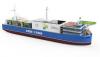 China Unveils Nuclear-Powered Floating Hub For Green Shipping
 China Launches World's 1st Commercial Brain Chip, Beating Elon Musk's Neuralink!
 Modular next-gen US nuclear reactor goes critical
 How EMF's cause disease
 This Company Will Add Phone, AirPod, and Smartwatch Trackers to License Plate Readers
 Elon Details SpaceX AI Data Center in Space Details and Roadmap
 5-in-1 miniature surgical robot is the size of a seed


Giving Iran Permanent Control Of The Strait Of Hormuz Will Be A Disaster For The Global Economy
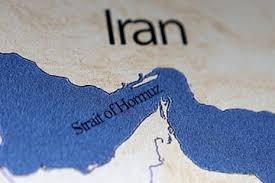
As you will see below, once the 60 days are over the Iranians will be allowed to charge vessels for passing through the Strait of Hormuz on a permanent basis. Any vessels that attempt to pass through the Strait without permission will be subject to attack by the Iranian military. In other words, the nightmare scenario that we have been enduring for the past several months will be institutionalized. I am shocked that U.S. negotiators would actually agree to this. With the Iranians in control, I seriously doubt that the flow of oil and natural gas out of the region will return to pre-war levels any time soon, and any oil and natural gas that does get exported will cost quite a bit more thanks to the protection racket that the Iranians will be running.
This is so humiliating.
The one thing that U.S. negotiators were supposed to get from this first stage of negotiations was the permanent toll-free opening of the Strait of Hormuz.
But instead, they handed sovereignty over the Strait of Hormuz to Iran…
Iran's state-run Fars News Agency on Monday cited a "knowledgeable source" who said the U.S.-Iran peace deal "includes U.S. acceptance, for the first time, of Iran's right to collect fees for maritime services" in the Strait of Hormuz.
According to the source, "explicit emphasis on Iranian-Omani sovereignty over the Strait of Hormuz" was added to the deal during "the final moments of the negotiations."
These final revisions to the deal supposedly stated that "future administration of maritime services in the Strait of Hormuz" will be "determined" by Iran and Oman, which lies on the opposite side of the strait.
Iranian negotiators wiped the floor with U.S. negotiators at the negotiating table.
I could think of other less polite ways of saying that, but I think that I shall refrain from doing so.
The only good news is that there will be a 60 day period for vessels that are currently trapped in the Persian Gulf to pass through the Strait of Hormuz without being charged…
The source told Fars that these revisions to the deal mean "the United States has effective accepted Iran's right to collect related service fees," after a 60-period of toll-free travel through the strait has elapsed.
"This principle is repeated elsewhere in the text. Iran will accept the passage of ships without charge only for 60 days. This means the United States has accepted the principle of collecting fees, while securing only a 60-day exemption from Iran," the source said.