










Breaking News
 The Most Important Room In America | From Connor Boyack #488 | The Way I Heard It
 How I'm Preparing For The "Supercycle"
 The Key Points of Trump's Iran Peace Deal, Israel's Nightmare Scenario and What to Expect Ne
 Bitcoin Bubble Has BURST! Peter Schiff vs. Anthony Pompliano
Top Tech News
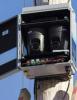 Heads up: Apparently the government is hiding cameras inside fake utility boxes
 Sodium Batteries And EVs That Power The Grid: Inside GM's Big Energy Push
 NUCLEAR ENGINE - UNLIMITED LUXURY - 20 YEARS WITHOUT REFUELING
 China Unveils Nuclear-Powered Floating Hub For Green Shipping
 China Launches World's 1st Commercial Brain Chip, Beating Elon Musk's Neuralink!
 Modular next-gen US nuclear reactor goes critical
 How EMF's cause disease
 This Company Will Add Phone, AirPod, and Smartwatch Trackers to License Plate Readers
 Elon Details SpaceX AI Data Center in Space Details and Roadmap
 5-in-1 miniature surgical robot is the size of a seed


Why Dividend Stocks, Bonds, and Real Estate No Longer Solve the Income Problem
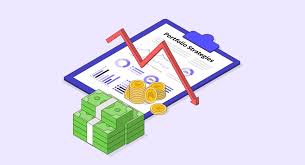
The ultimate goal is to generate enough after-tax dividend income to cover your monthly living expenses, keep pace with—or exceed—inflation, and continue growing over time.
For planning purposes, use 6.8% as the inflation hurdle rate, reflecting the long-term average growth of the money supply.
In practical terms, your after-tax dividend income should grow by at least 6.8% per year just to preserve purchasing power and offset average currency debasement.
That said, 6.8% is only a long-term average. In periods of aggressive monetary expansion—such as early 2021 during the Covid mass psychosis, when money supply growth exceeded 26%—currency debasement can be much higher.
So keep in mind that currency debasement can—and likely will—be worse than the long-term average in some years in the future.
As it pertains to high-quality dividend-paying stocks, this quote is especially relevant. Warren Buffett once wrote (emphasis mine): "When we own portions of outstanding businesses with outstanding managements, our favorite holding period is forever."
He was highlighting the importance of investing in great businesses and holding them for the long run, rather than frequently trading stocks based on short-term market movements. His philosophy is rooted in the belief that long-term ownership of high-quality companies leads to superior returns, especially when those businesses possess durable competitive advantages—what he refers to as an "economic moat."
In short, the key to building lasting wealth has been the same for centuries: owning enduring, high-quality businesses. Think Standard Oil, US Steel, McDonald's, Disney, Starbucks, Nestlé, or Coca-Cola. That is not going to change.
The easiest and fastest way to identify the highest-quality, most elite businesses is to look at the Dividend Aristocrats—a company that's increased its dividend for at least 25 consecutive years. These are some of the safest, strongest, and most durable companies in the world.
However, the current investment landscape presents challenges.
Finding high-quality businesses at reasonable valuations is becoming increasingly difficult, if not impossible.
The S&P 500's Price-to-Earnings (P/E) and CAPE (Cyclically Adjusted P/E) ratios are near historical highs.
Meanwhile, Market Cap to GDP (the Buffett Indicator) sits at a record high. It measures the total value of the US stock market relative to US GDP. Today, that ratio stands at roughly 214% — far exceeding prior peaks of 139% at the height of the dot-com bubble in 2000 and 106% at the peak of the housing bubble in 2007.
Rampant money printing by central banks has distorted financial markets like never before, rendering traditional fundamental analysis far less effective.
It's like using a measuring stick where the length of a centimeter keeps changing.
That's why I believe dividends are the most reliable indicator of true value. Unlike earnings, which can be manipulated through flexible accounting rules, dividends are real cash payments that land directly in your pocket—you can't fake that.
Unfortunately, dividend yields are generally near record lows, reflecting how overvalued the broader market has become.
On average, Dividend Aristocrats yield a meager 2.5%.