










Breaking News
 JD Vance Unloads on lsrael And The Neocons Are FURIOUS!
 The SPLC Is Awash in Cash -- Here's a Modest Proposal for What Should Be Done With the Dough
 Shapiro and Levin are BIG MAD over no 'forever war' in Iran…
 Netanyahu has a plan to undermine President Trump, and it includes Fox News…
Top Tech News
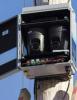 Heads up: Apparently the government is hiding cameras inside fake utility boxes
 Sodium Batteries And EVs That Power The Grid: Inside GM's Big Energy Push
 NUCLEAR ENGINE - UNLIMITED LUXURY - 20 YEARS WITHOUT REFUELING
 China Unveils Nuclear-Powered Floating Hub For Green Shipping
 China Launches World's 1st Commercial Brain Chip, Beating Elon Musk's Neuralink!
 Modular next-gen US nuclear reactor goes critical
 How EMF's cause disease
 This Company Will Add Phone, AirPod, and Smartwatch Trackers to License Plate Readers
 Elon Details SpaceX AI Data Center in Space Details and Roadmap
 5-in-1 miniature surgical robot is the size of a seed


The Last Places in America That Might Survive the Collapse

While nobody can predict the future, geography, history, climate, and demographics often tell stories that politicians and headlines prefer to ignore. This is not a prediction, nor is it meant to encourage fear. It is simply an attempt to examine a possibility that, until recently, most people dismissed as impossible.
Throughout history, civilizations have rarely collapsed in a single day. More often, they eroded gradually, with ordinary people realizing only in hindsight that they had been living through the beginning of the end. Perhaps the greatest illusion of every age is the belief that things will always continue exactly as they are.
Most Americans have spent their entire lives inside what may very well be one of the most sophisticated systems ever created. Electricity appears with the flick of a switch. Food arrives from thousands of miles away without anyone giving it a second thought. Water flows endlessly from taps, hospitals operate twenty-four hours a day, and millions of invisible processes work together so efficiently that society itself feels permanent. Yet permanence has always been one of history's favorite lies. The Roman Empire believed itself eternal. So did countless kingdoms, economies, and governments that eventually became little more than paragraphs in history books. Looking back, historians often discover that the warning signs had been present for years. The people living through those moments simply failed to recognize them because collapse rarely announces itself dramatically. More often, it arrives disguised as inflation, shortages, political instability, cyberattacks, failing infrastructure, and a growing sense that something fundamental no longer works the way it once did.
By 2026, those concerns have become increasingly difficult to dismiss. From attacks targeting critical infrastructure to rising geopolitical tensions, prolonged droughts, supply chain disruptions, and growing distrust between institutions and the public, a surprising number of Americans have begun asking questions that would have sounded absurd twenty years ago. Not because they expect the world to end tomorrow, but because history has repeatedly demonstrated that societies are far more fragile than they appear at their peak. The uncomfortable truth is that civilization itself rests upon a network of systems so complex that most people never notice them until they begin to fail. When those systems remain functional, cities are miracles. When they stop, cities can transform into something very different.
Hollywood has conditioned generations to imagine survival in terms of bunkers, zombies, or nuclear wastelands. Reality would almost certainly be less theatrical and far more unsettling. If modern America were ever confronted by a prolonged systemic failure, whether triggered by war, economic crisis, a cascading cyberattack, or a combination of multiple disasters occurring simultaneously, the greatest danger would not necessarily come from violence itself. It would come from dependency. The average supermarket contains only a few days' worth of food. Most metropolitan areas rely upon an endless stream of trucks delivering supplies around the clock. Hospitals require electricity, fuel, medicine, and highly coordinated logistics. Municipal water systems depend upon treatment plants and infrastructure that few citizens ever think about. Remove enough pieces from that machine, and the illusion of stability can disappear with shocking speed.