










Breaking News
 Why summer flies by as an adult--but lasted forever when you were 10
 Who's Winning The Robotaxi Race? It's... Complicated
 Israel hammers Lebanon despite reported deal with Hezbollah: As it happened (VIDEOS, PHOTOS)
 How Big Pharma Rigs Clinical Trials--And Gets Away With It
Top Tech News
 Heads up: Apparently the government is hiding cameras inside fake utility boxes
 Sodium Batteries And EVs That Power The Grid: Inside GM's Big Energy Push
 NUCLEAR ENGINE - UNLIMITED LUXURY - 20 YEARS WITHOUT REFUELING
 China Unveils Nuclear-Powered Floating Hub For Green Shipping
 China Launches World's 1st Commercial Brain Chip, Beating Elon Musk's Neuralink!
 Modular next-gen US nuclear reactor goes critical
 How EMF's cause disease
 This Company Will Add Phone, AirPod, and Smartwatch Trackers to License Plate Readers
 Elon Details SpaceX AI Data Center in Space Details and Roadmap
 5-in-1 miniature surgical robot is the size of a seed


The American Revolution and the Danger of Standing Armies
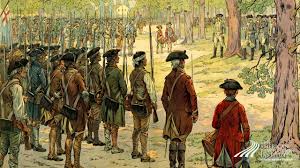
This was a heritage of British legal thought and history, and it became an underappreciated part of American political thought and experience.
Why were peacetime standing armies viewed as such a threat?
To many Americans of this period, peacetime standing armies posed a threat not only because they could be used by the state to overthrow liberty, but because they tended to reshape society and government itself. A permanent military establishment could develop interests distinct from those of the people, become an instrument for enforcing unpopular or unconstitutional policies, and concentrate power in the hands of central authorities.
Standing armies also required permanent taxation, debt, and bureaucracy, fostering what later historians would call a fiscal-military state. This process also creates vested interests. Once careers, contracts, pensions, and bureaucracies depend upon military expenditures, peace may no longer seem desirable by many. James Madison said,
Of all the enemies of true liberty, war is, perhaps, the most to be dreaded, because it comprises and develops the germ of every other.
War is the parent of armies; from these proceed debts and taxes; and armies, and debts, and taxes are the known instruments for bringing the many under the domination of the few. . . .
No nation can preserve its freedom in the midst of continual warfare.
Moreover, standing armies threatened to erode the ideal of the citizen-soldier by replacing local militias defending their homes with professional soldiers whose loyalty was directed primarily toward the state (which paid them). In the minds of many revolutionaries, standing armies and expanding government power were mutually reinforcing, with war and military necessity often serving as the justification for greater centralization and political control.
It is the contention of this article that the Continental Congress's decision to appoint George Washington commander of the Continental Army and to pursue his state-centric military strategy, together with the extraordinary fiscal and political measures adopted to sustain that strategy—including inflationary finance, public debt, legal tender laws, price controls, confiscation, and other wartime expedients—demonstrated the close relationship between war, standing armies, and the centralization of political power. We can observe a recurring historical pattern: war strengthens standing armies, standing armies require expanded state capacity, and expanded state capacity tends toward political centralization.