










Breaking News
 Alzheimer's hope: Nanoparticles regenerate cells to restore memory
 Wood fire alternative warms your campsite with a red-hot rod
 Scientists tested 212 plant-based meat alternatives. Every one contained fungal toxins
 This Is Where We Are? Kidnapping Foreign Leaders & Trying To Take Their Oil
Top Tech News
 Here's What to Expect as Air Taxis Actually Begin to Take Off
 'Wood Foam' Startup Uses Logging Waste as Substitute for Plastic, Producing 400 Pounds Daily
 How a Group of Young Men in 1933 Solved a Water Crisis in The Desert -- And Nobody Knows About It
 This American Battery Could Break China's Grip On The EV Supply Chain
 Tesla's Cybercab Launch Is Next Week. Here's What Tesla Still Needs To Prove
 800-passenger commercial plane boldly reinvents how we will fly
 Does Ultra-Fast Charging Ruin An EV Battery? BYD Did It 350 Times In 9 Days To Find Out
 Singapore is experimenting with biological computing using living human neurons...
 It's Happening - Europe is Building an Impossible Fusion Reactor
 Portable 1MW Kaleidos Microreactor Secures Critical Nuclear Fuel Deal Through 2030s



The CIA's John Ratcliffe Goes to Moscow
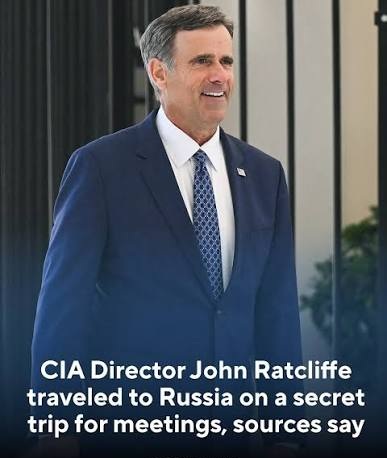
Last Monday the Central Intelligence Agency (CIA) Director (DCI) John Ratcliffe and his retinue boarded a US Air Force C-17 Globemaster transport plane at Joint Base Andrews airfield in Maryland, stopped presumably to refuel at the Riga airport in NATO member Latvia, and then flew on to land at Vnukovo International Airport, one of the four airports that serve the Russian capitol Moscow. The plane touched down on Tuesday at 9 am local time. The trip had been unannounced and its purpose was somewhat of a mystery. Ratcliffe and company departed the airport security zone in a diplomatic motorcade of armored vehicles that either were being transported in the plane itself or drawn from the US Embassy and CIA Station's own supply of administrative vehicles. One source speculates that the vehicles were being carried in the large transport aircraft because they were equipped with secure communications that would enable them to connect with Washington without the Russians having the ability to intercept what was being said.
It was Ratcliffe's first visit to actually meet with the Russian leadership, most notably the FSB national security's Aleksandr Bortnikov and Sergei Naryshkin, his foreign intelligence counterpart, with whom he had had some telephone discussions. There may have been some hope on the part of both Ratcliffe and President Donald J Trump that a meeting with President Vladimir Putin might be arranged, but that did not occur. Insofar as can be determined, the trip to Russia and the meeting took place due to insistence by Washington that there were several very important national security related issues involving both countries that needed to be discussed urgently during what the Russians afterwards described as "contacts between security services."