










Breaking News
 China's visa-free boom is rewriting inbound tourism
 A New Kind Of Hybrid Is Coming. See The 9 Extended-Range EVs Hitting America Soon
 America's Public Schools Have an Empty-Desk Problem
 Saudi, Turkey, Pakistan agree to Riyadh secretariat under defence pact;
Top Tech News
 Here's What to Expect as Air Taxis Actually Begin to Take Off
 'Wood Foam' Startup Uses Logging Waste as Substitute for Plastic, Producing 400 Pounds Daily
 How a Group of Young Men in 1933 Solved a Water Crisis in The Desert -- And Nobody Knows About It
 This American Battery Could Break China's Grip On The EV Supply Chain
 Tesla's Cybercab Launch Is Next Week. Here's What Tesla Still Needs To Prove
 800-passenger commercial plane boldly reinvents how we will fly
 Does Ultra-Fast Charging Ruin An EV Battery? BYD Did It 350 Times In 9 Days To Find Out
 Singapore is experimenting with biological computing using living human neurons...
 It's Happening - Europe is Building an Impossible Fusion Reactor
 Portable 1MW Kaleidos Microreactor Secures Critical Nuclear Fuel Deal Through 2030s



Feedstock Is Not Fuel: Why Venezuelan Crude Cannot Fix the Diesel and Jet Shortage
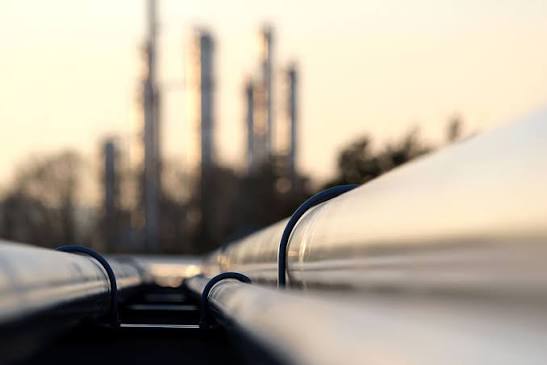
I am summarizing his piece, which is titled,"Venezuela Oil: The Physical Barrel and the Capital Bill," because it is not publicly available via a link.
On 27 August 2026, President Trump announced what he called the biggest oil deal in world history — a US–Venezuela agreement giving the United States majority control of more than 65 billion barrels of Venezuelan reserves, which he said would "substantially lower Gas Prices for all Americans." The pitch landed with gasoline near $4.09 a gallon, about 27% higher than a year earlier and on track for the most expensive August on record, as a six-month Iran war and the Hormuz disruption kept a fifth of world supply under strain — and with the midterms two months away.
Independent analysts noted the arithmetic fails on that timeline: the 30 to 50 million barrels Trump floated is less than half a day of global consumption, the 65 billion is an in-ground estimate rather than available supply, and any price effect would take years. Miller's briefing goes underneath that objection to the more fundamental one: Venezuelan crude is the wrong substance to fix the shortage Americans feel at the pump. It is not a magical fix. In the near term it is not a fix at all.
The point most likely to be missed
The shortage that bites right now is in product — diesel and jet fuel — and extra-heavy Venezuelan crude is not product. It is refinery feedstock. You cannot relieve a middle-distillate shortage with a barrel that still has to be diluted, blended, upgraded, coked, and hydroprocessed before it yields a usable gallon of anything.
This is why the "turn Venezuela on" reflex fails on its own terms. Even setting aside whether Caracas can produce more, the barrels that already exist do not add supply where the market is tight. Prompt US cargoes would largely be diverted from Venezuela's current buyers — China, India, Europe — not created on top of global production. That reshuffles refinery slates and trade routes; it does not repair a physical shortage. A barrel moved from a Chinese refiner to a US one is a change of address, not a new barrel, and certainly not a new gallon of jet fuel.
Why the feedstock gap is binding
The nature of the crude is the reason. Roughly three-quarters of Venezuelan production through 2028 is expected to be heavy, extra-heavy, or bitumen, with the Orinoco Belt supplying about 60%. That material is the raw input at the very front of the conversion process; the finished distillate barrel sits many capital-intensive steps downstream — coking and hydroprocessing capacity, hydrogen, refinery uptime, yields, distribution — none of which a cargo of Merey crude supplies. The price tells the same story: Merey 16 averaged $67.36/bbl in July 2026, about $12.35 under the OPEC basket, the market pricing in the cost of converting this crude into something useful. Venezuela cannot repair a current crude or middle-distillate shortage, because the missing piece was never the crude.