










Breaking News
 China's visa-free boom is rewriting inbound tourism
 A New Kind Of Hybrid Is Coming. See The 9 Extended-Range EVs Hitting America Soon
 America's Public Schools Have an Empty-Desk Problem
 Saudi, Turkey, Pakistan agree to Riyadh secretariat under defence pact;
Top Tech News
 Here's What to Expect as Air Taxis Actually Begin to Take Off
 'Wood Foam' Startup Uses Logging Waste as Substitute for Plastic, Producing 400 Pounds Daily
 How a Group of Young Men in 1933 Solved a Water Crisis in The Desert -- And Nobody Knows About It
 This American Battery Could Break China's Grip On The EV Supply Chain
 Tesla's Cybercab Launch Is Next Week. Here's What Tesla Still Needs To Prove
 800-passenger commercial plane boldly reinvents how we will fly
 Does Ultra-Fast Charging Ruin An EV Battery? BYD Did It 350 Times In 9 Days To Find Out
 Singapore is experimenting with biological computing using living human neurons...
 It's Happening - Europe is Building an Impossible Fusion Reactor
 Portable 1MW Kaleidos Microreactor Secures Critical Nuclear Fuel Deal Through 2030s



America's Public Schools Have an Empty-Desk Problem
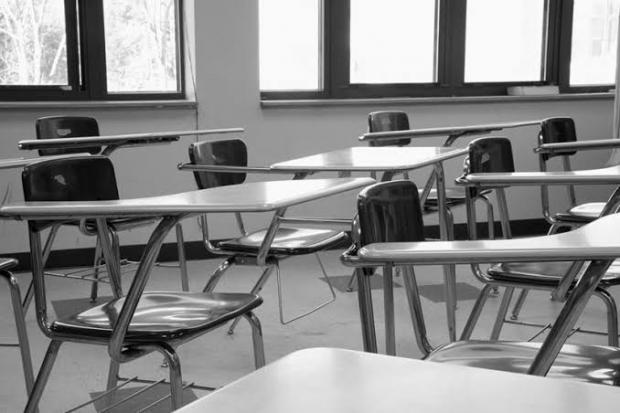
Chronic absenteeism is defined as a student missing 10 percent of classes, roughly 18 days in a typical school year. About one in five American kids now fall into that category. In New York City public schools, the figure climbs to roughly one in three.
Chicago Public Schools reported more than 40 percent of students as chronically absent in the 2024-25 school year. Among black students, the rate hit 45 percent; among Latino students it reached 41 percent. Ninth-graders logged 48.5 percent chronic absenteeism, while seniors hit an astonishing 72 percent.
These numbers are not random. They are the predictable result of a government-run monopoly that faces no real competition, and therefore has little reason to meet the needs of families or keep students interested in attending. When the local assigned school is the only option, administrators and teachers' unions can coast. They collect funding whether the building is full of engaged learners or filled with empty desks.
Assigned schools aren't holding students accountable for their behavior, so students take the easy road when they can. Shame on public schools for exercising the soft bigotry of low expectations.
Douglass Academy High School on Chicago's West Side was designed for more than 1,000 students. Today it enrolls 27. The school employs 28 staff members, a one-to-one student-to-staff ratio. Per-pupil spending exceeds $90,000. With that kind of money, one might expect stellar academics and high engagement. Reality is the opposite. Nearly 66 percent of the enrolled students are chronically absent. Not a single child scores proficient in math or reading.
Pouring more money into a broken structure does not fix the underlying problem. It simply subsidizes continued failure.
Contrast that with the evidence from private-school choice. The most recent gold-standard evaluation of the DC Opportunity Scholarship Program, released in 2019, found that winning a lottery for a private-school scholarship reduced chronic absenteeism by 27 percent. The same study showed that scholarship winners were 34 percent more likely to report attending a very safe school than their peers who remained in public schools. The program also raised students' satisfaction with their schools by 18 percent, another clear reason for improved attendance.
There are no doubt many reasons some schools suffer from chronic absenteeism while others do not, but evidence suggests that a school's environment plays a role. Research shows that students are more likely to miss school when they fear bullying or violence.
This is why giving parents choice in where they send their kids to learn is so important, and research suggests the benefits of school choice extend beyond the students who exercise the power of exit to switch schools. A peer-reviewed study published in the American Economic Journal in 2023, titled "Effects of Maturing Private School Choice Programs on Public School Students," examined Florida's expanding choice programs. The researchers found that greater competition from private options reduced chronic absenteeism inside the public schools themselves. When families can walk away and take the funding with them, public schools suddenly face pressure to improve. School choice functions as a rising tide that lifts all boats.
Policy design matters as well. Basing public-school funding on actual attendance rather than simple enrollment creates a direct financial incentive to get students through the door. Tracking attendance more frequently would give educators early-warning signals so they can adjust instruction or outreach before absences become chronic. These mechanical fixes, however, only work when the underlying product is worth attending.