










Breaking News
 China's visa-free boom is rewriting inbound tourism
 A New Kind Of Hybrid Is Coming. See The 9 Extended-Range EVs Hitting America Soon
 America's Public Schools Have an Empty-Desk Problem
 Saudi, Turkey, Pakistan agree to Riyadh secretariat under defence pact;
Top Tech News
 Here's What to Expect as Air Taxis Actually Begin to Take Off
 'Wood Foam' Startup Uses Logging Waste as Substitute for Plastic, Producing 400 Pounds Daily
 How a Group of Young Men in 1933 Solved a Water Crisis in The Desert -- And Nobody Knows About It
 This American Battery Could Break China's Grip On The EV Supply Chain
 Tesla's Cybercab Launch Is Next Week. Here's What Tesla Still Needs To Prove
 800-passenger commercial plane boldly reinvents how we will fly
 Does Ultra-Fast Charging Ruin An EV Battery? BYD Did It 350 Times In 9 Days To Find Out
 Singapore is experimenting with biological computing using living human neurons...
 It's Happening - Europe is Building an Impossible Fusion Reactor
 Portable 1MW Kaleidos Microreactor Secures Critical Nuclear Fuel Deal Through 2030s



A New Kind Of Hybrid Is Coming. See The 9 Extended-Range EVs Hitting America Soon
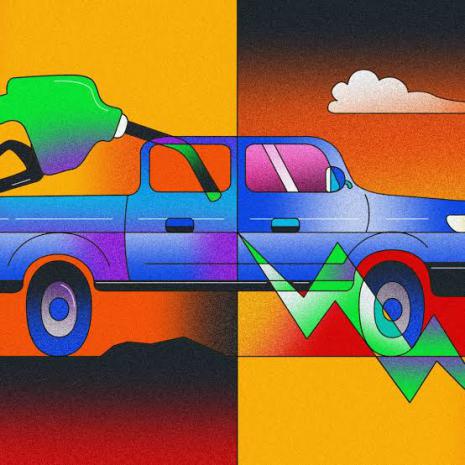
As Americans come to grips with the new reality of the car market, where the $7,500 federal tax credit is a distant dream, a new type of hybrid vehicle is preparing to take the country by storm. Companies like Ford, Hyundai, Ram, and Jeep are all jumping into the fray to launch "extended-range electric vehicles" in the U.S. over the next few years.
Below we've compiled all the EREVs confirmed for the U.S. market—and what we know about them so far.
What is an extended-range EV (EREV)?
Just like other hybrids, EREVs combine a combustion engine, an electric motor (or motors), and a battery. But while traditional hybrids are essentially gas vehicles with a little electric assistance, EREVs are electric vehicles first and foremost. They're propelled by an electric powertrain that's virtually identical to what you'd find in an electric car, but they feature a combustion engine that solely acts as a generator to boost range.
As a result, EREVs promise many of the benefits of regular EVs—smooth acceleration, quiet operation, and zero-emission travel—but without the range anxiety or charging concerns. The concept is similar to a plug-in hybrid, but typically with more electric driving range.
EREVs can be plugged in at home or at a public fast charger for daily trips. But the gas component can come in handy too for longer journeys or other situations where electricity alone can't cut it. Long lines at the fast-charging station? No problem. No charger in the hotel parking lot? No sweat. Just fill up your EREV's tank at the local gas station and let the generator feed the battery. That gas engine can't drive the wheels directly in an EREV, but it can create electricity for the car's electric motors.
In particular, automakers are embracing the idea for large pickup trucks and SUVs. By pairing an electric powertrain with a gas tank, the thinking goes, companies can offer more range for towing. Plus, bulky vehicles are harder to electrify in a cost-effective way than smaller ones, due to the enormous batteries required to deliver enough range. (One example: Ford couldn't crack the economics on the F-150 Lightning EV, so it is planning an EREV version.)
EREVs are popular in China and have existed in the U.S. before; think the first-generation BMW i3, Fisker Karma, or subsequent Karma Revero. But the concept is getting a modern reboot in America as automakers content with a public and a regulatory environment that's less open to pure EVs than they previously expected.
Now, let's take a look at all the EREVs that will go on sale in America in 2026, 2027 and beyond.