










Breaking News
 Shawn Ryan: America May Not Stay A Superpower, China Is Watching Us Self-Destruct
 Dusty Slay - Moon Landing Conspiracies, Flat Earth, Aliens and the Nephilim | SRS #344
 The Cult of the Colossal and Industrial Strength
 NANO Nuclear Buys The One Thing You Can't Speed Up: A Fuel-Cycle License
Top Tech News
 Elon Musk's Next-Gen Motor Destroy Entire EV Industry
 China's disputed satellite refueling heralds new space war era
 BYD Will Put Solid-State Batteries In An EV Next Year: Executive
 FDA-cleared exoskeleton puts spinal-cord patients back on their feet
 Your Robotic Vacuum Is Watching You -- Could It Someday Testify Against You in Court?
 Why Unigrid's Sodium-Ion Batteries Are the Game-Changer for Off-Grid Energy Storage
 This Battery On Wheels Makes Any Diesel Truck Electric In 5 Minutes
 Mass-Production of AI Infrastructure – Speed Up by 10X
 3D-printed Martian mud homes look critical for life beyond Earth
 Inside The Texas Factory Racing To Break China's Grip On EV Magnets



Modern Monarchy Is State Privilege, Not Private Property
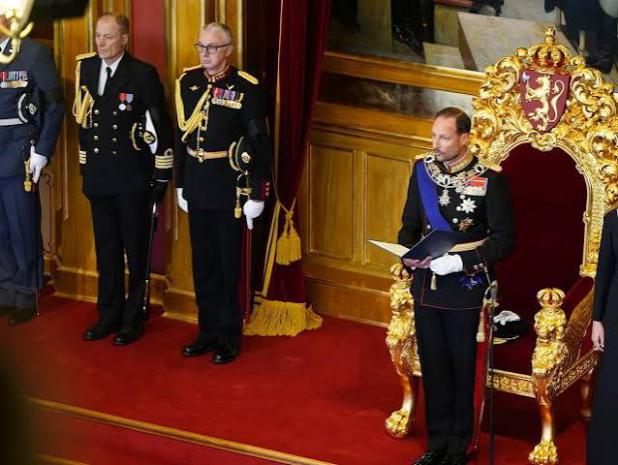
The usual debate asks whether a king is democratic, whether the royal family behaves well, or whether the institution costs too much. A libertarian analysis should begin somewhere more basic: why should the state compel ordinary people to finance hereditary privilege at all?
That distinction matters because inequality itself is not the libertarian objection. A wealthy entrepreneur who becomes rich through voluntary exchange is not analogous to a royal household whose status is created by law, whose office is inherited, and whose institutional expenses are financed through taxation. The problem is not that the king has more than other people; it is that the state gives one family a privileged legal position that no competitor can enter.
This is especially striking in Norway, a country that prides itself on equality and limited social hierarchy. The 2026 state budget allocated roughly NOK 308 million directly to the Royal House, with additional appropriations for royal properties, vessels, travel, and related functions bringing identifiable public spending to roughly NOK 469 million before undisclosed police-security costs. Norway can afford the bill, but libertarianism asks whether ability to pay creates a right to tax.
Norway's constitutional arrangement also formalizes inequality before the state. Article 5 of the Constitution states that the king cannot be censured or accused and places responsibility on his council. Whatever the historical rationale, the result is a legally exceptional office filled through ancestry rather than contract, competition, or voluntary association.
Mises Wire has recently asked whether libertarians should be monarchists, and that debate usefully distinguishes different forms of monarchy. Medieval or decentralized monarchies sometimes rested on private property, weak bureaucratic states, and rulers who had to finance much of their activity from their own domains. A modern Scandinavian monarchy is almost the reverse: it is a ceremonial appendage of a large tax state, financed through public budgets and surrounded by modern administrative and security apparatuses.
That difference is decisive. Hans-Hermann Hoppe and other libertarian writers have sometimes argued that a hereditary ruler with a long time horizon may have more "skin in the game" than politicians who temporarily control state resources. Whatever one thinks of that argument, it loses much of its force when the monarch neither owns the state nor meaningfully governs it, yet taxpayers remain compelled to support the institution.
Defenders of Norway's monarchy can make a better argument than tourism or tradition. A politically-neutral monarch can provide continuity and represent the country without campaigning, raising political money, or defeating half the electorate. King Harald performed that role well enough that many Norwegians came to view the crown as a source of social cohesion rather than political domination.
But if neutrality is the benefit, heredity is not logically necessary to produce it. Germany and Ireland have ceremonial heads of state without granting one bloodline permanent access to the office. A libertarian should be especially skeptical of the claim that a useful public function must therefore be monopolized by a legally-privileged family.
Modern monarchy also depends heavily on moral legitimacy because it possesses so little real governing power. Once kings cease ruling, their remaining justification becomes symbolic: dignity, restraint, service, continuity, and supposedly exemplary conduct. This is why scandals surrounding a royal household matter institutionally even when they do not change a single tax rate or regulation.