










Breaking News
 Something Is VERY WRONG With Silver
 What The Hell Is Going On With Beef? | Brooke Rollins #505 | The Way I Heard It
 WARNING: U.S. Mint Is SUSPENDING Silver Dealers
 Trump Just Admitted Unthinkable Dollar Reset (Most Don't Understand the Plan)
Top Tech News
 Flying cell tower beams phone signal to Japan from 10 miles up
 Chinese Commercial Reactor Achieves Nuclear Fusion with Clean Hydrogen-Boron Fuel
 Med Beds Just Took a MASSIVE Step Forward, Healing People in Days!
 Palmer Luckey: Autonomous Weapons Are Ancient and Why Anduril Won't Build Humanoids | EP #295
 A laser just photographed objects through six feet of concrete
 Elon Musk's Next-Gen Motor Destroy Entire EV Industry
 China's disputed satellite refueling heralds new space war era
 BYD Will Put Solid-State Batteries In An EV Next Year: Executive
 FDA-cleared exoskeleton puts spinal-cord patients back on their feet
 Your Robotic Vacuum Is Watching You -- Could It Someday Testify Against You in Court?



What The Hell Is Going On With Beef? | Brooke Rollins #505 | The Way I Heard It
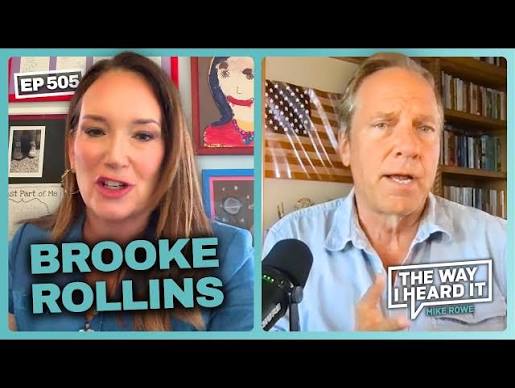
A few weeks ago, I sat down with Secretary of Agriculture Brooke Rollins at the Reagan Library for a conversation about farmers, food, freedom, and the curious path that took a former FFA kid from a tiny town in Texas all the way to the President's Cabinet. It was a good conversation, and I was looking forward to sharing it.
Then, the price of ground beef became headline news: https://bit.ly/4iUux1n. The President announced a temporary pause on tariffs for hundreds of thousands of tons of imported beef, and a lot of American ranchers weren't thrilled. Several of them called me. Some I've known since my Dirty Jobs days. Others I've met more recently. All had questions, and so did I.
Which is why, before posting our original conversation, I called Brooke back and asked her to explain what's happening in the wide world of ground beef. Why is the American cattle herd at a 75-year low? Why are we importing more beef when American ranchers are struggling? What's the difference between helping consumers in the short term and protecting producers in the long term? And when you buy a package of beef at the grocery store, shouldn't you know where the hell it came from?
Those questions led us into a much bigger conversation about the increasingly complicated business of feeding 340 million people in a country where most of us have grown accustomed to full shelves, affordable food, and very little thought about how any of it gets there.
A lot happened in between these two conversations. And if you share my addiction to chewing and swallowing things, this one's probably worth your time.