










Breaking News
 Why Cities Should Convert Public Property to Private Housing
 Elon Musk plans SpaceXSI rebrand for AI unit amid 'Super Intelligence' push
 'Got little bit more involved beyond advocacy': Jaishankar on India's peace efforts to e
 Doctors Euthanize 17-Year-Old Girl Who Had Depression and Anxiety
Top Tech News
 Most artificial limbs rely on silicone or plastic to mimic human hands.
 Flying cell tower beams phone signal to Japan from 10 miles up
 Chinese Commercial Reactor Achieves Nuclear Fusion with Clean Hydrogen-Boron Fuel
 Med Beds Just Took a MASSIVE Step Forward, Healing People in Days!
 Palmer Luckey: Autonomous Weapons Are Ancient and Why Anduril Won't Build Humanoids | EP #295
 A laser just photographed objects through six feet of concrete
 Elon Musk's Next-Gen Motor Destroy Entire EV Industry
 China's disputed satellite refueling heralds new space war era
 BYD Will Put Solid-State Batteries In An EV Next Year: Executive
 FDA-cleared exoskeleton puts spinal-cord patients back on their feet



Why Cities Should Convert Public Property to Private Housing
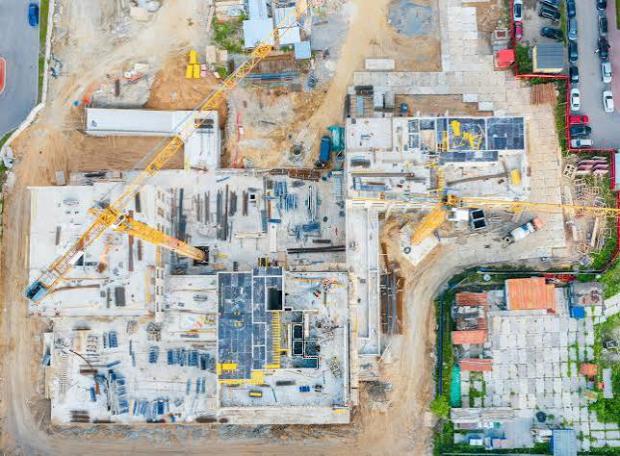
In a recent piece for Works in Progress, "a magazine of new and underrated ideas to improve the world," Zigmund Forrest and Maxwell Tabarrok noted that since "the completion of Battery Park City in 1976, there has not been a single major urban land reclamation project in the United States." The researchers believe that water-adjacent cities should "make more land" to, among other things, boost affordable housing.
But there's another approach urban America can employ to promote budget-friendly homes, and it doesn't require massive civil-engineering projects: Sell the properties it's been hoarding.
According to Lincoln Institute of Land Policy President George W. McCarthy, "large amounts of publicly owned land sit vacant or underutilized, their purpose mismatched to current needs." The phenomenon is "especially true at more local levels of government, like cities, counties, states, school districts and public authorities."
The demand isn't in doubt. Estimates vary, but no one denies that the United States has a dearth of millions of housing units. With eight in 10 Americans living in urbanized areas, city divestment of land—and sale of structures that can be repurposed for residential use—is a solution starting to garner attention.
The opening offered by the birth crunch is perhaps the best place to begin. The nation's total fertility rate is at a record low. Add scant baby-making to both the growth of homeschooling and expanding education-choice options, and it's easy to understand why K-12 government schools are shedding "customers" at a rapid pace.
Per EdSource, in the last five years, "Los Angeles County lost 32,953 students, more than half from the Los Angeles Unified School District." KOMO reported that Seattle Public Schools "lost 3,000 students between 2020 and this past school year." City Journal noted that in 2025, in New York, 112 "public schools enrolled fewer than 150 students, up from 80 just two years earlier," with overall "enrollment… down by almost 90,000 students since 2020." This summer, Philadelphia is closing 17 schools.
Think the collapse is confined to deep-blue metros along the Pacific and Atlantic coasts? It's no different in Flyover Country, per local news reports: Las Vegas ("a drop of nearly 44,000 from the [enrollment] height during the 2018–19 school year"); Scottsdale, Ariz., (it "could repurpose up to eight schools over the next two years"); Tucson (in "in a do-or-die struggle for enrollment," according to its superintendent); Provo, Utah ("considering the potential closure of four elementary schools"); Denver (more "school closures will be necessary in the upcoming years"); and Austin (a "sharp decline is straining… finances and accelerating difficult decisions about consolidations and cuts").
Then there's Houston (closing "12 campuses beginning in the 2026–2027 school year, citing declining enrollment and rising maintenance costs"); St. Louis (pupils dropped "from 43,284 in 1991 to 17,981 in 2025"); Memphis (five schools closed at the end of this year); Cedar Rapids, Iowa, (which "might have to close as many as six elementary schools"); Atlanta (the "APS Forward 2040" plan "shutters some schools and combines others as the district grapples with old facilities and… low enrollment"); and Tampa ("preparing for a new round of school closure and consolidation recommendations").
Conversion from classroom to condo presents challenges, to be sure. But location is a major advantage. "Unlike commercial office buildings," Forbes wrote in 2023, "which often are situated far from supermarkets and other necessities of residential life, schools offer the benefit of being located in enclaves that already effectively serve hundreds or thousands of residents." The same can be said for land owned by transit systems. Well before the lockdown, commuters were eschewing government's buses and trains. But what terrifies transportation planners presents an opportunity for developers.
Enterprise Community Partners, a "national nonprofit that exists to make a good home possible for the millions of families without one," recently published an examination of "the number, location, size and key characteristics of land owned by transit agencies" in California. It determined that 2,875 parcels—currently vacant or used as "parking lots, stations and passenger depots, rail right of way (those which include a substantive portion extending beyond the track), office buildings, park-and-ride lots, bus parking, [and] other transit maintenance facilities"—are "potentially available" for almost 240,000 units of affordable housing. "For context, California Housing Partnership estimates that there are approximately 1.3 million low-income households in California who need an affordable home," the group explains.