










Breaking News
 HERE WE GO: Evacuations Underway After Massive Wildfire Breaks Out in Los Angeles...
 FBI Director Kash Patel Gets Engaged to Country Singer Alexis Wilkins...
 Trump Calls On Senate To Pass Bill Making Daylight Saving Time Permanent
 Trump Admin Proposes Rules For 1st National School Choice Program
Top Tech News
 Most artificial limbs rely on silicone or plastic to mimic human hands.
 Flying cell tower beams phone signal to Japan from 10 miles up
 Chinese Commercial Reactor Achieves Nuclear Fusion with Clean Hydrogen-Boron Fuel
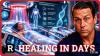 Med Beds Just Took a MASSIVE Step Forward, Healing People in Days!
 Palmer Luckey: Autonomous Weapons Are Ancient and Why Anduril Won't Build Humanoids | EP #295
 A laser just photographed objects through six feet of concrete
 Elon Musk's Next-Gen Motor Destroy Entire EV Industry
 China's disputed satellite refueling heralds new space war era
 BYD Will Put Solid-State Batteries In An EV Next Year: Executive
 FDA-cleared exoskeleton puts spinal-cord patients back on their feet



Trump Admin Proposes Rules For 1st National School Choice Program

The regulations pertain to the Federal Scholarship Tax Credit (FSTC) program, enacted under the One Big Beautiful Bill Act. FSTC allows individual taxpayers to claim tax credits for certain cash contributions they make to Scholarship Granting Organizations (SGOs). SGOs are entities providing scholarships to cover elementary and secondary school expenses.
The scholarships disbursed by the SGOs can be used by recipients for a wide range of education expenses, including tuition for private school, academic tutoring, books, special-needs services, supplies, computers, and other expenses related to the enrollment or attendance of a student, the IRS said in an Oct. 1 statement.
FSTC "marks a new chapter in educational freedom and opportunity by establishing America's first nationwide school choice program and empowering states to give students and families more options," Treasury Secretary Scott Bessent said in the statement.
"Thirty states have already opted in, and we encourage all 50 states to participate so every American student and family can benefit," Bessent said.
Individual taxpayers can get tax credits of up to $1,700 under FSTC, while married couples filing jointly can claim credits of up to $3,400, the IRS said.
Tax Credit Calculation
According to the proposed regulations published in the Federal Register on Oct. 2, a taxpayer can contribute to any SGO in any state participating in the FSTC program, provided the organization is listed on the IRS's SGO list.
The regulations clarify the calculation of tax credits when a taxpayer donates to SGOs and seeks credits from both state and federal governments.
For example, if the taxpayer lives in a state that allows a 100 percent tax credit of up to $2,000 in SGO contributions and the person makes $5,000 in such contributions for a year, the individual can get $1,700 in tax credits from the federal government and $2,000 in credits from the state government for a total of $3,700 in tax benefits, according to the regulations.
Since the FSTC tax credit is nonrefundable, it can only reduce the federal tax bill and cannot generate a refund. However, the regulations state that any unused credit for a particular year "may be carried forward for up to five years."
In its recent statement, the IRS said that the FSTC is scheduled to launch on Jan. 1, 2027. States are free to join the tax credit program and identify eligible SGOs.
The program prohibits states from imposing unnecessary restrictions on access to scholarships, including limiting the types of schools scholarship recipients can attend. According to the IRS, FSTC expands educational freedom, puts students first, strengthens parental rights, and restores power to the states.