










Breaking News
 HERE WE GO: Evacuations Underway After Massive Wildfire Breaks Out in Los Angeles...
 FBI Director Kash Patel Gets Engaged to Country Singer Alexis Wilkins...
 Trump Calls On Senate To Pass Bill Making Daylight Saving Time Permanent
 Trump Admin Proposes Rules For 1st National School Choice Program
Top Tech News
 Most artificial limbs rely on silicone or plastic to mimic human hands.
 Flying cell tower beams phone signal to Japan from 10 miles up
 Chinese Commercial Reactor Achieves Nuclear Fusion with Clean Hydrogen-Boron Fuel
 Med Beds Just Took a MASSIVE Step Forward, Healing People in Days!
 Palmer Luckey: Autonomous Weapons Are Ancient and Why Anduril Won't Build Humanoids | EP #295
 A laser just photographed objects through six feet of concrete
 Elon Musk's Next-Gen Motor Destroy Entire EV Industry
 China's disputed satellite refueling heralds new space war era
 BYD Will Put Solid-State Batteries In An EV Next Year: Executive
 FDA-cleared exoskeleton puts spinal-cord patients back on their feet



Trump Calls On Senate To Pass Bill Making Daylight Saving Time Permanent
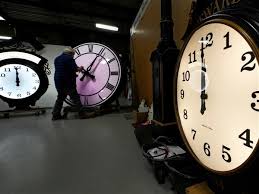
"A ridiculous Clock changing process that takes place twice a year, costs our Country a fortune, is bad for Crime, stress on people, Sports, and just about everything else you can imagine," Trump said in a long Truth Social post early Friday.
He added that people don't want to change their clocks while asserting that "most people like having an hour of extra sunlight in the evening, rather than in the morning."
The House in July passed the measure, dubbed the Sunshine Protection Act, on a 308-117 vote before sending it to the Senate for approval. But the bill has not been considered.
"It is foolish, inconvenient and, in some cases, very costly. For Cities and States with Watchtowers, and hard to reach places, it costs Millions of Dollars. A recent case was made that it is also bad for your health in the anxiety it creates," the president said.
Blaming Sen. Tom Cotton (R-Ark.) for holding up the bill, Trump wrote that the bill has bipartisan support. "Democrats and Republicans want it to happen. It's now up to the U.S. Senate where it would be another Great Bipartisan Victory," he added.
Last year, Cotton told the Senate that he would oppose the measure and said a similar measure was repealed in the mid-1970s.
In 1973, Congress passed a law instituting permanent daylight saving time for what was supposed to be a trial period from January 1974 to April 1975. It lasted until October, when it was repealed. Among the concerns was worry that schoolchildren would have to start the school day without daylight.
"While briefly popular, it proved deeply unpopular when reality set in," Cotton said, adding that polls taken at the time show that support for permanent daylight saving time dropped by 30 percentage points in three months.
"Only a few weeks after it was implemented, it was underwater. Congress beat a hasty retreat, repealing the law and changing the clocks back in October. What was supposed to be a two-year experiment ended in abject failure after less than one year."
Sen. Mike Rounds (R-S.D.) said he's also concerned about that. He said that it would be dark past 9:30 a.m. in some areas of his state. "You'd be sending kids to school in the dark," he told The Associated Press last year.
Before it was passed in the House, some Democratic lawmakers including Rep. Frank Pallone (D-N.J.) explained why they supported the Sunshine Protection Act.
The measure, Pallone said in July, would deal with "an issue on which many Americans actually agree," adding that only around 12 percent of Americans want to switch their clocks twice per year.